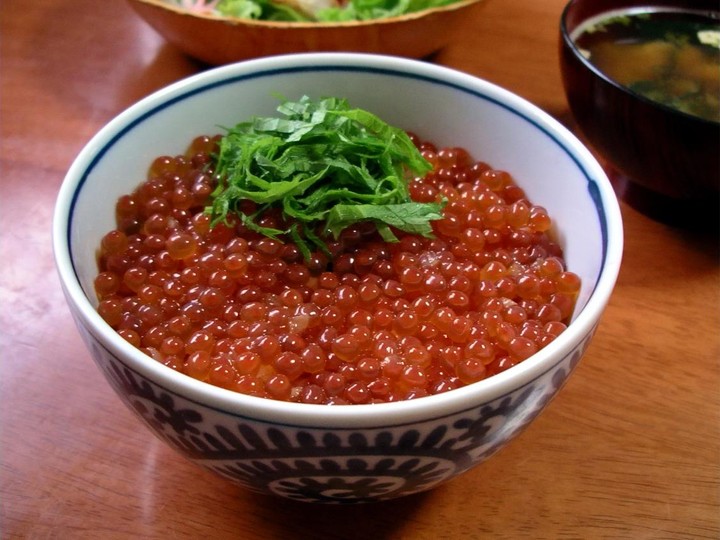
Alaskan wild sockeye salmon roe (ikura)
Large, ruby-red sockeye roe from the world's most abundant wild salmon fishery.
| Origin | Bristol Bay, Alaska, USA |
| Indian subcontinent | No |
| Category | Global Rare Foods & Ingredients |
| Retail price band | $$$ ($30–$70 per lb retail, cured/salted) |
| Bulk / trade price band | Wholesale frozen ikura: indicative $12–$25/kg (ex-vessel/processor, grade-dependent) |
| Sourcing status | Dossier researched from public sources — producer contact not yet established |
| Compliance status | Preliminary review complete (see below) — not yet legally verified |
Detailed study
Ikura is cured sockeye (or other Pacific) salmon roe, separated into individual eggs, typically brined in salt or soy-based tare; sockeye roe is valued for its deep red-orange color, firm pop and clean flavor compared to other Pacific salmon species.
Provenance & producer
Bristol Bay, Alaska hosts the world's largest sockeye salmon run, with fish caught by permitted drift and set gillnet fleets under Alaska Department of Fish and Game escapement-based management; roe is separated and processed at shore-based or floating processors soon after catch to preserve freshness.
Market & pricing
Bristol Bay accounts for roughly half of global sockeye harvest and a large share of world wild salmon roe supply; demand is driven by Japanese ikura/sushi markets and growing US/European gourmet retail, with Bristol Bay branding used as a premium sustainability marketing point.
Compliance & export
Bristol Bay sockeye fishery is Marine Stewardship Council (MSC) certified for sustainability and managed under strict state escapement-goal regulation; export requires FDA/USDC seafood inspection compliance and, for EU-bound product, EU health-certificate seafood import rules. Not CITES-listed.
Sources
Image status
A working reference photograph is in place, captured from a freely-licensed Wikimedia Commons source. Ikuradon, a bowl of rice topped with salmon roe (ikura), Flickr user Blue Lotus, CC BY 2.0, via Wikimedia Commons. Note: illustrative of ikura generally; not documented as wild Alaskan sockeye specifically. Treat this as a placeholder for marketing purposes: exact licence terms should be re-verified on the Commons file page, and original producer photography is recommended before final trade use.