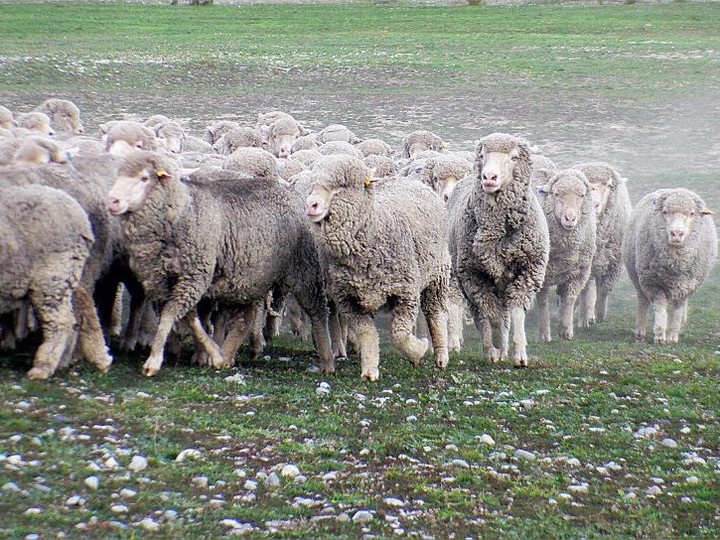
Argentine Patagonian merino fibre
Fine merino fibre from the wind-swept wool estancias of Argentine Patagonia.
| Origin | Patagonia, Argentina |
| Indian subcontinent | No |
| Category | Global Fibers, Oils & Botanicals |
| Retail price band | $$$ (greasy/clean merino, indicative $6–14/kg clean, grade-dependent) |
| Bulk / trade price band | Bale-lot contract pricing benchmarked against global merino micron-grade indicators; certified sustainable/RWS lots carry a premium |
| Sourcing status | Dossier researched from public sources — producer contact not yet established |
| Compliance status | Preliminary review complete (see below) — not yet legally verified |
Detailed study
Merino sheep, descended from Spanish flocks, were introduced to Argentina and subsequently spread through many parts of the world including South America; in Patagonia they graze the extensive arid steppe of provinces such as Chubut, Santa Cruz and Río Negro, which offers large rangeland areas well suited to fine-wool production.
Provenance & producer
Patagonia is one of Argentina's principal wool-growing regions, historically built around large sheep estancias. In recent decades, grower groups and certification programmes (including links to the Textile Exchange's Responsible Wool Standard) have developed to differentiate traceable, welfare-certified Patagonian merino from generic global wool supply.
Market & pricing
Global apparel and outdoor/activewear brands increasingly seek traceable, non-mulesed fine wool, positioning Argentine Patagonian merino as a premium alternative or complement to Australian and South African merino. Buyers include spinners, knitwear manufacturers and outdoor-apparel companies pursuing Responsible Wool Standard (RWS) or equivalent certification.
Compliance & export
No CITES restriction applies (domestic livestock fibre). Exports require Argentine SENASA animal-health and phytosanitary certification; welfare attestations (non-mulesed status, RWS certification) are increasingly demanded by EU and US apparel buyers, and well-managed rotational grazing is promoted within the industry to address Patagonian steppe overgrazing and desertification concerns.
Sources
Image status
A working reference photograph is in place, captured from a freely-licensed Wikimedia Commons source. Merino sheep flock, Bernard Spragg NZ, Christchurch, New Zealand, public domain, via Wikimedia Commons. Note: photographed in New Zealand, not Patagonia; illustrative of the Merino breed generally. Treat this as a placeholder for marketing purposes: exact licence terms should be re-verified on the Commons file page, and original producer photography is recommended before final trade use.