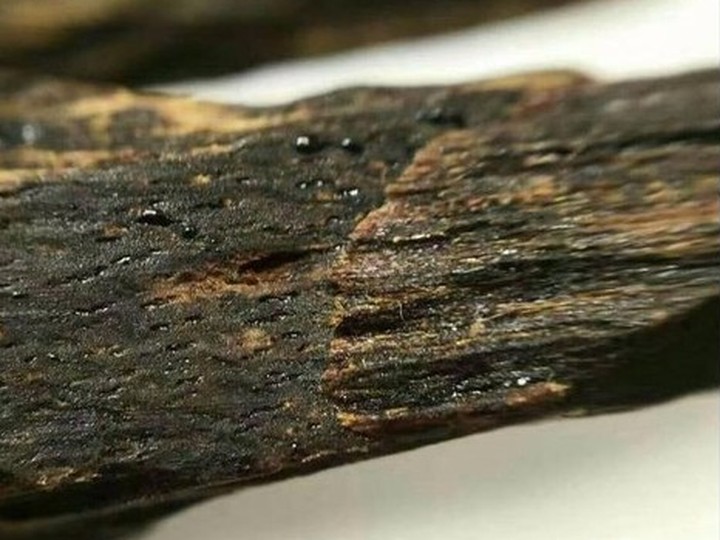
Assam agarwood (oud) resin chips, wild-grade
Resin-infused heartwood chips from Aquilaria malaccensis trees inoculated and grown in Upper Assam — the same species and region long prized for producing some of the world's most sought-after oud.
| Origin | Assam, India is a genuine and significant agarwood (Aquilaria malaccensis) growing and processing region, so the origin itself is plausible. However, the 'wild-grade' claim needs a strong compliance flag: Aquilaria malaccensis is listed on CITES Appendix II and protected under Indian wildlife/forest law, so legal wild-harvested agarwood is tightly quota-restricted, and the large majority of India's legally traded agarwood today comes from cultivated/plantation trees (inoculated to induce resin formation), not wild-felled ones. A 'wild-grade' product claim should be treated as compliance-sensitive and backed by verifiable CITES export permits and provenance documentation, or reworded to 'plantation-grown, wild-species agarwood.' |
| Indian subcontinent | Yes |
| Category | Rare Spices, Botanicals & Teas |
| Retail price band | Retail: agarwood/oud prices vary enormously by resin grade, from roughly $100/kg for low-resin chips to several thousand dollars per kg for high-grade wild or old-growth resin, per industry pricing overviews |
| Bulk / trade price band | Pricing under research |
| Sourcing status | Dossier researched from public sources — producer contact not yet established |
| Compliance status | Preliminary review complete (see below) — not yet legally verified |
Detailed study
Agarwood forms in Aquilaria trees (notably A. malaccensis in Assam) when the heartwood becomes infected by mould and produces a dark, fragrant resin in response; resin content and distribution determine grade, with the highest grades commanding extreme prices due to scarcity — genuinely high-resin wild agarwood is now rare, so market grading heavily emphasizes resin percentage, colour, oil yield and burn characteristics rather than 'wild' status alone.
Provenance & producer
Assam (particularly Upper Assam districts such as Sivasagar, Hojai and surrounding areas) has a long-established agarwood cultivation and processing industry, with tens of thousands of small growers now farming inoculated Aquilaria trees under India's regulated agarwood/CITES export framework, alongside historic natural populations in Assam's forests.
Market & pricing
Agarwood/oud is among the world's most expensive natural materials by weight for top grades, driven by Middle Eastern and East Asian perfumery demand; India's CITES export quota for agarwood was increased in recent years, benefiting registered growers and processors (per government/CITES reporting).
Compliance & export
Aquilaria malaccensis is CITES Appendix II-listed, meaning international trade requires valid CITES export permits tied to India's national export quota; wild harvesting is additionally restricted under Indian forest/wildlife law, so any 'wild-grade' claim must be substantiated with permit documentation. Destination markets (EU, US) enforce CITES import controls strictly for agarwood/oud products.
Sources
- Down To Earth — CITES notifies increase in annual export quota for agarwood in India
- TRAFFIC — Factsheet on India's Agarwood in Illegal Wildlife Trade
- WWF India — Agarwood in Illegal Wildlife Trade
Image status
A working reference photograph is in place, captured from a freely-licensed Wikimedia Commons source (File:Agarwood.JPG). Genuine agarwood resin-wood photograph; not confirmed as Assam-specific but product/species-accurate. Treat this as a placeholder for marketing purposes: exact licence terms should be re-verified on the Commons file page, and original producer photography is recommended before final trade use.