Assam Muga-region orthodox black tea
Malty, full-bodied orthodox black tea hand-processed from Camellia sinensis var. assamica grown in Upper Assam's Brahmaputra-valley gardens — the same tea-growing belt that gave the world 'Assam tea.'
| Origin | "Muga" is not a recognized Assam tea-growing sub-region, garden name, or trade grade — it is exclusively the name of Assam's distinct wild silk (Muga silk, woven from cocoons of the semi-domesticated moth Antheraea assamensis), which is itself separately GI-tagged. No orthodox tea is marketed under 'Muga-region' nomenclature in the tea trade. This product name appears to conflate two unrelated Assamese GI products. The origin should be corrected to a genuine Assam tea-growing description, e.g. 'Upper Assam tea gardens (Dibrugarh, Tinsukia, Sivasagar districts), India,' and the product should be renamed accordingly (e.g. 'Upper Assam orthodox black tea'). |
| Indian subcontinent | Yes |
| Category | Rare Spices, Botanicals & Teas |
| Retail price band | Retail: specialty orthodox Assam runs roughly Rs 800-2,500/kg depending on garden and flush; standard CTC-grade Assam trades far lower |
| Bulk / trade price band | Pricing under research |
| Sourcing status | Dossier researched from public sources — producer contact not yet established |
| Compliance status | Preliminary review complete (see below) — not yet legally verified |
Detailed study
Assam tea comes from Camellia sinensis var. assamica, a larger-leafed varietal native to the Brahmaputra valley, distinct from the China-variety bushes used in Darjeeling. Orthodox (whole-leaf) processing is a smaller, premium subset of Assam's output, which is overwhelmingly CTC (crush-tear-curl) for the mass tea-bag market; orthodox Assam is valued for its malty, brisk, full-bodied liquor.
Provenance & producer
Grown across Upper Assam districts such as Dibrugarh, Tinsukia and Sivasagar on estates dating to 19th-century British plantation agriculture, alongside smallholder 'small tea grower' plots that now supply a large share of Assam's total leaf.
Market & pricing
Orthodox Assam commands a premium over bulk CTC tea in both domestic and export specialty markets, though it remains a small fraction of Assam's overall tea output (which is dominated by CTC for the mass market); pricing tracks Guwahati Tea Auction Centre benchmarks.
Compliance & export
'Assam (Orthodox)' tea holds an Indian GI tag administered by the Tea Board of India. Export requires Tea Board registration; destination markets apply standard food-safety import rules (EU pesticide MRLs have periodically flagged Assam tea shipments, so current compliance documentation should be verified per shipment).
Sources
- Wikipedia — Assam tea
- Assam Gamosa — Muga Silk of Assam, GI Tag Product
- Wikimedia Commons — Category:Tea plantations in Assam
Image status
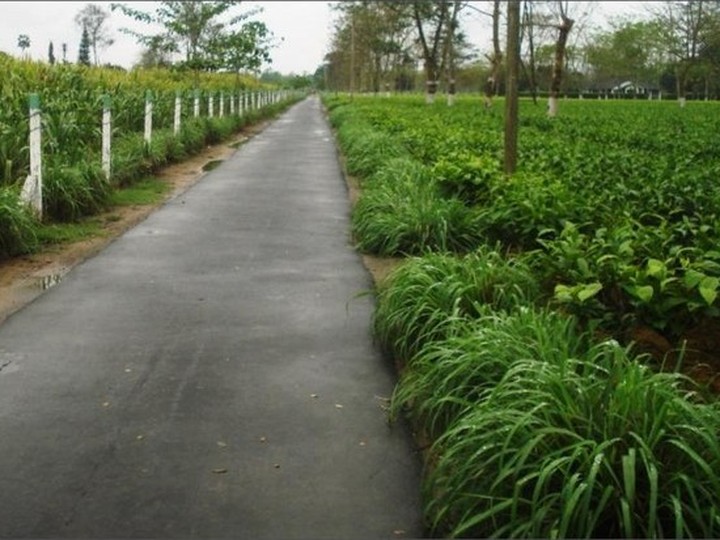
A working reference photograph is in place, captured from a freely-licensed Wikimedia Commons source (File:Tea Garden in Tinsukia District.JPG). Genuine Upper Assam (Tinsukia district) tea garden photo — matches the corrected origin, not the fabricated 'Muga-region' name; verify CC licence on file page. Treat this as a placeholder for marketing purposes: exact licence terms should be re-verified on the Commons file page, and original producer photography is recommended before final trade use.