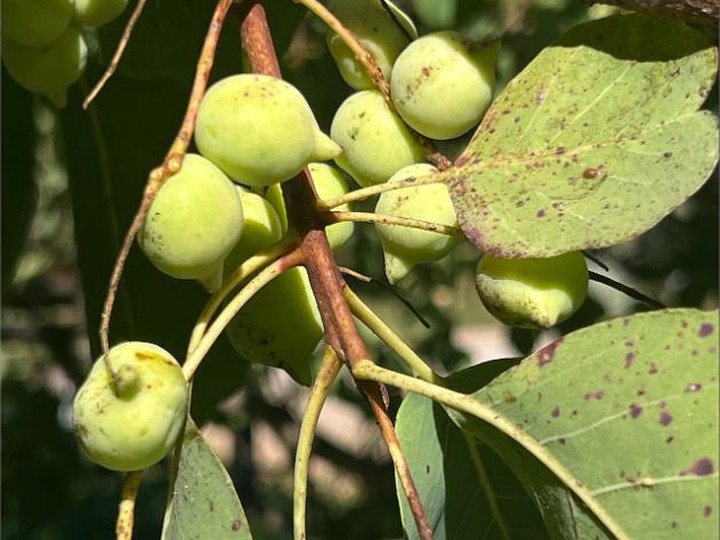
Australian Kakadu plum extract (highest vitamin-C fruit)
Wild-harvested bush fruit holding the world record for natural vitamin-C concentration.
| Origin | Northern Territory, Australia |
| Indian subcontinent | No |
| Category | Global Rare Foods & Ingredients |
| Retail price band | $$$$ (indicative A$400–$600/kg wholesale powder/extract) |
| Bulk / trade price band | Bulk freeze-dried powder: indicative A$450–$550/kg; fresh/frozen fruit priced lower per kg due to high yield loss in processing |
| Sourcing status | Dossier researched from public sources — producer contact not yet established |
| Compliance status | Preliminary review complete (see below) — not yet legally verified |
Detailed study
Kakadu plum (Terminalia ferdinandiana, also gubinge/billygoat plum) is a small native Australian fruit recorded at 2,300–3,150 mg vitamin C per 100g wet weight (occasionally up to ~5,300 mg/100g) — roughly 50–100x the vitamin C of oranges — making it recognized as the world's richest known natural source of vitamin C.
Provenance & producer
Native to tropical woodlands across northern Australia (Northern Territory including the Kakadu/Arnhem Land region, and the Kimberley in Western Australia), the fruit is predominantly wild-harvested, often through Aboriginal community-led enterprises that combine traditional ecological knowledge with commercial supply chains.
Market & pricing
Kakadu plum has moved from a niche bush-food ingredient into cosmetics, nutraceuticals and functional-food markets; global demand is growing but supply remains limited and wild-harvest dependent.
Compliance & export
As a wild-harvested native species with Indigenous cultural significance, supply chains are increasingly subject to Australia's Nagoya Protocol-aligned benefit-sharing and biodiscovery legislation (Northern Territory/Commonwealth access-and-benefit-sharing rules); export requires standard Australian food-export and, for supplement claims, TGA/FSANZ compliance. Not CITES-listed.
Sources
- Wikipedia — Terminalia ferdinandiana (Kakadu plum)
- Australian Native Food and Botanicals industry body
Image status
A working reference photograph is in place, captured from a freely-licensed Wikimedia Commons source. Terminalia ferdinandiana (Kakadu plum) growing near Broome, Western Australia, Allthingsnative, CC BY 4.0, via Wikimedia Commons Treat this as a placeholder for marketing purposes: exact licence terms should be re-verified on the Commons file page, and original producer photography is recommended before final trade use.