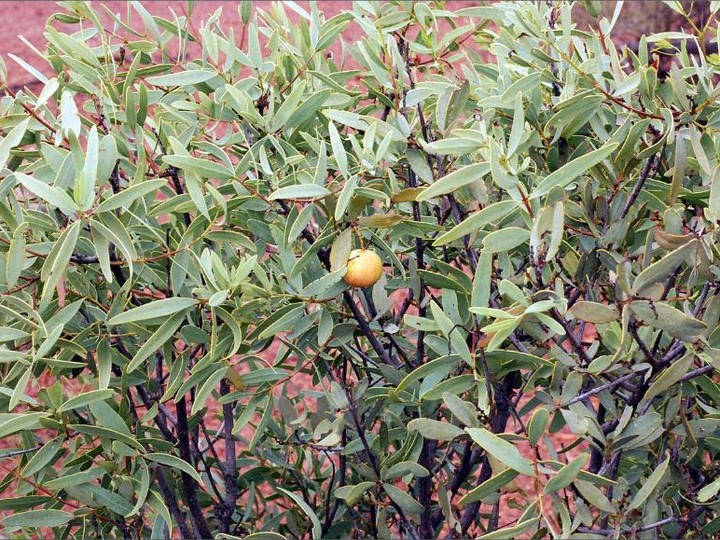
Australian sandalwood oil, plantation-grown
Sustainably plantation-grown Santalum album oil from Western Australia's managed sandalwood estates.
| Origin | Western Australia |
| Indian subcontinent | No |
| Category | Global Fibers, Oils & Botanicals |
| Retail price band | $$$$ (indicative $1,200–$2,500/kg — sandalwood oil is among the highest-value essential oils by volume) |
| Bulk / trade price band | Contract pricing on drum-lot volumes; plantation-grown supply gives more price stability than wild-harvested Indian sandalwood |
| Sourcing status | Dossier researched from public sources — producer contact not yet established |
| Compliance status | Preliminary review complete (see below) — not yet legally verified |
Detailed study
Sandalwood oil is steam-distilled from the heartwood of mature Santalum trees, prized for its rich, creamy, long-lasting woody-sweet aroma dominated by santalol compounds; genuine Indian sandalwood (Santalum album), historically the benchmark species, has become severely supply-constrained due to overharvesting, driving global demand toward cultivated alternatives.
Provenance & producer
Western Australia has developed large-scale commercial Santalum album plantations (notably through companies such as Quintis/TFS) over recent decades specifically to supply legal, traceable, sustainably grown sandalwood oil as Indian wild supply collapsed; trees are grown as root-hemiparasites requiring host plants and take 15+ years to mature before harvest.
Market & pricing
Global demand for genuine Santalum album oil spans fine fragrance, luxury cosmetics, traditional medicine (Ayurveda, TCM) and religious/ceremonial use across South and Southeast Asia and the Middle East; Australian plantation-grown oil is marketed specifically as a legal, sustainability-certified, fully traceable alternative to increasingly restricted or higher-risk wild Indian sandalwood.
Compliance & export
Santalum album is not directly CITES-listed at the species level, but Indian domestic law heavily restricts wild sandalwood harvest and export given historic overexploitation, making plantation-grown Australian material commercially important precisely because of that scarcity; Australian exports require standard biosecurity/customs certification, and premium buyers often request Forest Stewardship Council (FSC) or equivalent plantation-sustainability certification.
Sources
Image status
A working reference photograph is in place, captured from a freely-licensed Wikimedia Commons source. Western Australian sandalwood (Santalum spicatum) foliage and fruit, Jean and Fred Hort, CC BY 2.0, via Wikimedia Commons Treat this as a placeholder for marketing purposes: exact licence terms should be re-verified on the Commons file page, and original producer photography is recommended before final trade use.