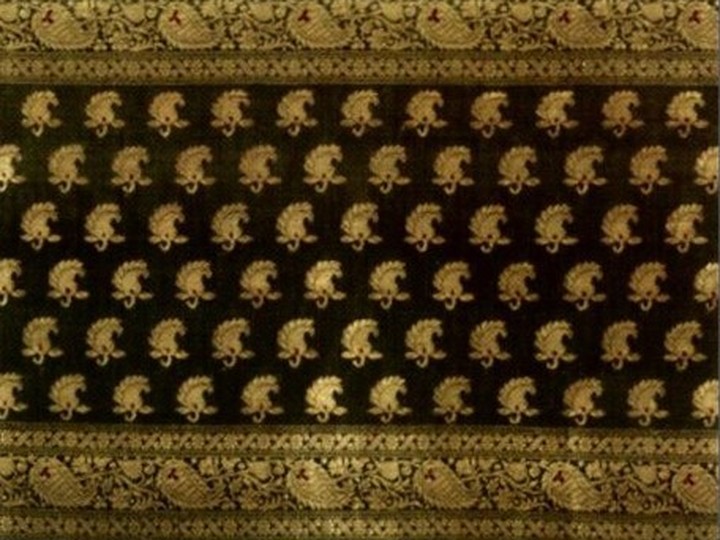
Banarasi Katan silk brocade sari
Woven in Varanasi since the Mughal courts — pure Katan silk, real zari, no shortcuts.
| Origin | Varanasi, Uttar Pradesh, India |
| Indian subcontinent | Yes |
| Category | Heritage Textiles & Weaves |
| Retail price band | luxury |
| Bulk / trade price band | premium |
| Sourcing status | Dossier researched from public sources — producer contact not yet established |
| Compliance status | Preliminary review complete (see below) — not yet legally verified |
Detailed study
Banarasi Katan is a pure, twisted (katan) silk woven with gold and silver zari brocade in techniques such as kadwa, jangla and tanchoi. A single sari can take anywhere from 15 days to several months on a pit or jacquard-fitted handloom, depending on the density of the brocade work.
Provenance & producer
The craft is centred on Varanasi, Uttar Pradesh, with roots tracing to Persian-origin weaver migration during the 15th-17th centuries and Mughal-era patronage. Banarasi silk products received GI protection in 2009, legally restricting the name to saris woven within six designated districts around Varanasi, and the trade supports an estimated 1.2 million people directly and indirectly.
Market & pricing
Genuine handwoven Katan-silk Banarasi brocade sits at the luxury end of the Indian sari market, positioned for bridal/festive retail, heritage collectors, and export to the NRI diaspora; power-loom and Chinese-yarn 'Banarasi-look' imitations dominate the lower price tiers and are a persistent authenticity concern for buyers.
Compliance & export
GI-registered Banarasi goods should carry the official GI authorization mark to be legally sold as 'Banarasi silk'; export requires accurate silk-content and zari-content labeling (real zari uses silver/gold-coated thread vs. cheaper 'tested' synthetic zari), and international buyers should be informed the term 'Banarasi' is a protected geographic indicator, not a generic style name.
Sources
Image status
A working reference photograph is in place, captured from a freely-licensed Wikimedia Commons source (File:'Sari' from Varanasi (north-central India), silk and gold-wrapped silk yarn with supplementary weft brocade.jpg). Public domain (Honolulu Academy of Arts collection), per Commons file page. Treat this as a placeholder for marketing purposes: exact licence terms should be re-verified on the Commons file page, and original producer photography is recommended before final trade use.