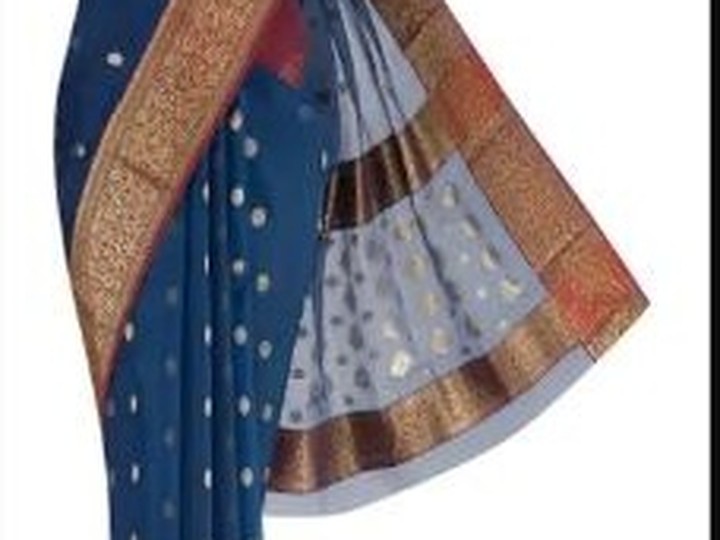
Chanderi handwoven sari, zari-work
Featherlight silk-cotton woven with gold, from a 700-year-old Madhya Pradesh loom town.
| Origin | Chanderi, Madhya Pradesh, India |
| Indian subcontinent | Yes |
| Category | Heritage Textiles & Weaves |
| Retail price band | premium |
| Bulk / trade price band | mid |
| Sourcing status | Dossier researched from public sources — producer contact not yet established |
| Compliance status | Preliminary review complete (see below) — not yet legally verified |
Detailed study
Chanderi fabric is woven in three main forms — pure silk, Chanderi cotton, and a silk-cotton blend — on traditional handlooms, prized for its sheer, lightweight texture and translucent glossy finish. Motifs (coins, peacocks, floral buttis, geometric patterns) are woven directly into the fabric with gold and silver zari, giving genuine pieces a subtle 'shimmer' rather than a printed sheen.
Provenance & producer
The weaving tradition is centred on Chanderi town in Ashoknagar district, Madhya Pradesh, with weaving history tracing back to the 2nd-7th centuries and the sari-focused craft developing prominently from the 13th century onward under Koli weaver communities; Chanderi carries a registered GI tag protecting the name for fabric woven in the designated region.
Market & pricing
Chanderi's light weight and versatility (day wear to festive wear) place it in the premium-but-accessible bracket relative to heavier Banarasi brocades, appealing to urban Indian retail buyers and increasingly to export boutiques seeking 'wearable heritage' pieces; the sector has faced recent volume pressure from power-loom competition and fabric substitution.
Compliance & export
Genuine Chanderi should be sold with GI-compliant labeling and accurate zari-content disclosure (real vs. synthetic 'tested' zari materially affects both price and import duty classification); as a lightweight silk/cotton-blend product it faces standard textile fibre-content labeling rules in export markets such as the US (Textile Fiber Products Identification Act) and EU.
Sources
Image status
A working reference photograph is in place, captured from a freely-licensed Wikimedia Commons source. Chanderi saree with zari border, blue and gold-bordered handloom sari, MANOJKUMARDILDAR, CC0/Public Domain Dedication, via Wikimedia Commons. Treat this as a placeholder for marketing purposes: exact licence terms should be re-verified on the Commons file page, and original producer photography is recommended before final trade use.