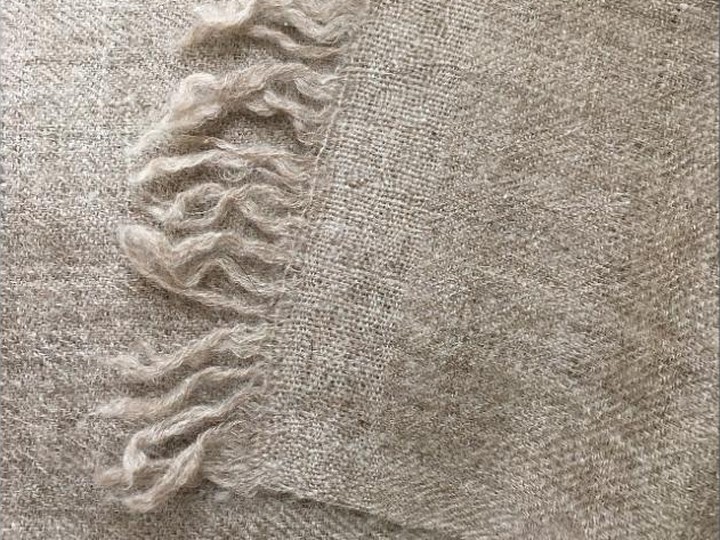
Changthangi Pashmina shawl, hand-spun GI-tagged
Himalayan warmth, spun by hand from the world's finest cashmere goat fibre.
| Origin | The Changthangi goat and its raw pashm fibre are correctly attributed to the Changpa herders of the Changthang plateau in Ladakh, but the GI registration that legally protects 'hand-spun, hand-woven pashmina' (GI application filed by the Craft Development Institute) is registered as 'Kashmir Pashmina,' with combing, hand-spinning and weaving traditionally done in Srinagar, not Ladakh itself. A shawl marketed as purely 'Ladakh-origin, GI-tagged' should specify whether the raw fibre alone or the full finished product (spinning+weaving) was completed in Ladakh, since most GI-certified finished shawls are processed in the Kashmir valley even though the fibre is Ladakhi. |
| Indian subcontinent | Yes |
| Category | Heritage Textiles & Weaves |
| Retail price band | luxury |
| Bulk / trade price band | premium |
| Sourcing status | Dossier researched from public sources — producer contact not yet established |
| Compliance status | Preliminary review complete (see below) — not yet legally verified |
Detailed study
Changthangi pashmina is made from the ultra-fine (12–16 micron) undercoat combed, not sheared, from Changthangi goats each spring. The fibre is hand-spun on a traditional charkha (yinder) and hand-woven on pit looms; a single stole can take up to 180 hours of labour, and the material is prized for a warmth-to-weight ratio unmatched by machine-spun cashmere.
Provenance & producer
The Changthangi goat is native to the Changthang plateau of Ladakh (13,500+ ft elevation, winters to -40°C), herded by the semi-nomadic Changpa community. Raw pashm is traditionally exported to Srinagar in Kashmir for combing, spinning and weaving, where the finished product falls under the 'Kashmir Pashmina' Geographical Indication.
Market & pricing
Genuine hand-spun pashmina commands premium-to-luxury pricing (often 3-5x machine-spun 'pashmina-blend' shawls sold internationally) and targets discerning retail buyers, gifting/bridal segments, and boutique export buyers in the US, EU and Gulf markets who value provenance and hand-craft documentation.
Compliance & export
Export requires accurate fibre-content labeling (pure pashmina vs. pashmina-silk-blend) under Indian textile labeling rules and destination-country wool/animal-fibre import laws; GI-tagged goods should carry the official Kashmir Pashmina GI logo/certificate to avoid misbranding claims, and buyers should be warned that 'shahtoosh' (from the endangered Tibetan antelope/chiru) is a CITES-banned material entirely distinct from legal pashmina and must never be conflated with it.
Sources
- Pashmina Vogue - What is GI Pashmina?
- Changthangi Goat of Ladakh - Origin of Pashmina
- Wikipedia - Pashmina
Image status
A working reference photograph is in place, captured from a freely-licensed Wikimedia Commons source. Handwoven cashmere pashmina from Srinagar, Kashmir, AG, CC BY-SA 4.0, via Wikimedia Commons Treat this as a placeholder for marketing purposes: exact licence terms should be re-verified on the Commons file page, and original producer photography is recommended before final trade use.