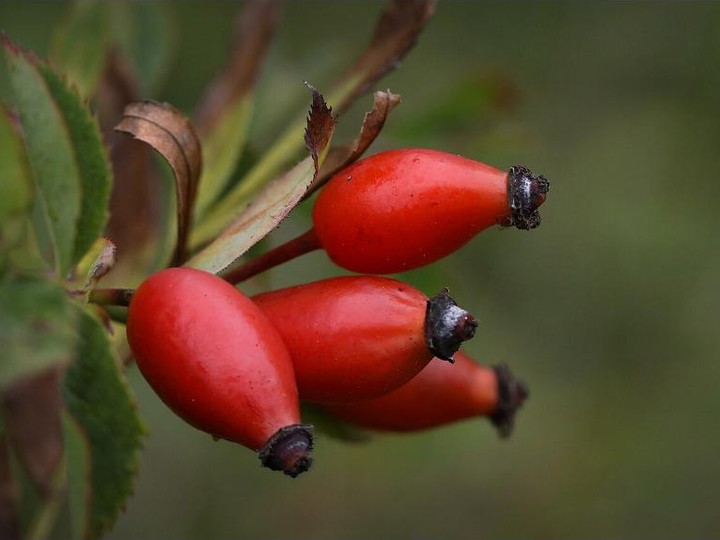
Chilean rose-hip seed oil, cold-pressed
Cold-pressed wild rosehip seed oil from southern Chile's wild rose thickets.
| Origin | Chile is genuinely the world's leading producer/exporter of rosehip seed oil, but the core commercial belt — La Araucanía, Los Ríos and Los Lagos regions (Chile's 'Lake District'), where Rosa rubiginosa grows naturalised on former pastureland — lies north of formally defined Chilean Patagonia (Aysén and Magallanes regions further south). 'Patagonia' is used loosely as a marketing/regional shorthand in this trade; buyers should confirm the precise region of origin on the certificate of analysis. |
| Indian subcontinent | No |
| Category | Global Fibers, Oils & Botanicals |
| Retail price band | $$ (crude cold-pressed, indicative $25–45/kg; organic/refined grades higher) |
| Bulk / trade price band | Drum lots (180–200kg) on contract; organic-certified lots command a premium over conventional |
| Sourcing status | Dossier researched from public sources — producer contact not yet established |
| Compliance status | Preliminary review complete (see below) — not yet legally verified |
Detailed study
Rosehip seed oil is cold-pressed from the seeds inside the hips (fruit) of wild rose species — chiefly Rosa rubiginosa (sweetbriar). It is rich in essential fatty acids (linoleic and alpha-linolenic acid) and provitamin-A compounds, and has a long history of use in skin-regeneration and anti-scarring cosmetic formulations under the trade name 'rosa mosqueta'.
Provenance & producer
Chile is the dominant global source of commercial rosehip seed oil. Rosa rubiginosa was introduced from Europe and has naturalised extensively — and become a declared invasive species — across southern-central Chile, particularly La Araucanía, Los Ríos and Los Lagos, where wild harvesting of the hips doubles as a control measure for the invasive plant.
Market & pricing
Global cosmetic and skincare demand (scar treatment, anti-aging, stretch-mark oils) drives steady export volumes, with buyers ranging from contract oil refiners to natural cosmetics manufacturers seeking organic-certified crude or refined oil. Chile exports both bulk crude oil and higher-value organic/refined grades.
Compliance & export
No CITES restriction applies. Because Rosa rubiginosa is officially classified as an invasive species in Chile, wild harvesting carries a genuine ecological-control rationale rather than a conservation concern. Exports are regulated by Chile's Servicio Agrícola y Ganadero (SAG) for phytosanitary compliance, and premium tiers commonly carry USDA/EU organic certification.
Sources
Image status
A working reference photograph is in place, captured from a freely-licensed Wikimedia Commons source. Ripe red rose hips (Rosa sp.), Charlie Marshall, Bristol, UK, CC BY-SA 4.0, via Wikimedia Commons. Note: photographed in the UK, not Chile; illustrative of the ripe rose-hip fruit used for cold-pressed seed oil generally. Treat this as a placeholder for marketing purposes: exact licence terms should be re-verified on the Commons file page, and original producer photography is recommended before final trade use.