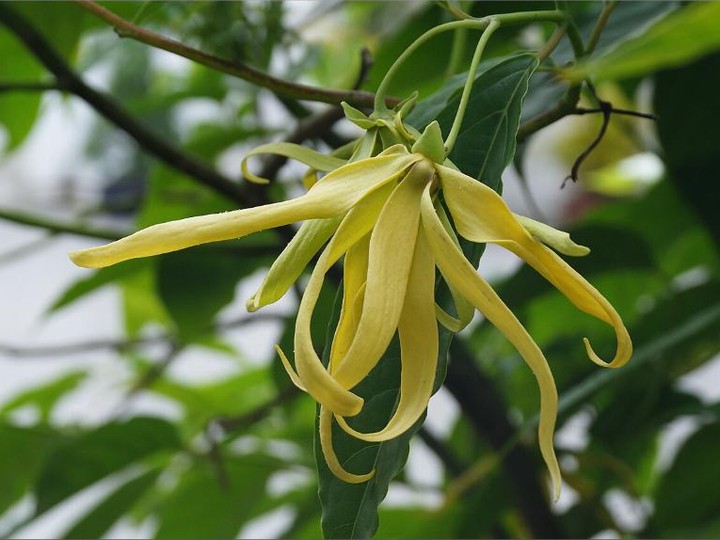
Comoros ylang-ylang extra grade
First-fraction 'Extra' ylang-ylang — Comoros' signature aromatic export.
| Origin | The 'Extra' grade terminology is genuine and correctly used, but Comoros' global market share and export-revenue ranking for ylang-ylang has declined relative to Madagascar (Nosy Be) over recent decades, and vanilla now often rivals or exceeds ylang-ylang in Comorian export value. The product's grading claim is accurate; broader 'top producer' framing should be avoided. |
| Indian subcontinent | No |
| Category | Global Fibers, Oils & Botanicals |
| Retail price band | $$$$$ (Extra grade premium, indicative $250–450/kg) |
| Bulk / trade price band | Small-lot/cooperative sourcing; volumes are limited so pricing is typically quoted per shipment rather than standing bulk rates |
| Sourcing status | Dossier researched from public sources — producer contact not yet established |
| Compliance status | Preliminary review complete (see below) — not yet legally verified |
Detailed study
'Extra' is the first and most volatile fraction collected during fractional steam distillation of Cananga odorata flowers — gathered earliest in the distillation run, it is the lightest and most ester-rich fraction and is generally regarded as the most refined, highest-value grade compared to the later First, Second and Third fractions.
Provenance & producer
The Comoros archipelago (notably Anjouan and Mohéli) was historically the world's leading ylang-ylang source and remains a major producer, with ylang-ylang long forming a substantial share of the islands' agricultural export earnings. Production is largely smallholder- and cooperative-based, using small on-farm stills.
Market & pricing
Fine perfumery buyers specifically seek Comorian 'Extra' as a top-tier raw material distinct from Malagasy complete or lower-fraction oils, supporting a premium price despite limited volumes. Niche perfume houses, natural fragrance brands and aromatherapy specialists are the main purchasers, often via direct or cooperative-trade relationships given the small, dispersed grower base.
Compliance & export
No CITES restriction applies. Export passes through Comorian national customs and quality-control bodies; EU fragrance buyers increasingly request smallholder/cooperative traceability documentation, and downstream use is subject to IFRA usage limits and EU REACH substance-registration requirements.
Sources
Image status
A working reference photograph is in place, captured from a freely-licensed Wikimedia Commons source. Cananga odorata (ylang-ylang) flower, Prenn, Quality image, CC BY-SA 3.0, via Wikimedia Commons. Note: same photo illustrates both the Madagascar and Comoros listings, as both concern the same species and flower morphology; the specific plant photographed is not documented as being from either island. Treat this as a placeholder for marketing purposes: exact licence terms should be re-verified on the Commons file page, and original producer photography is recommended before final trade use.