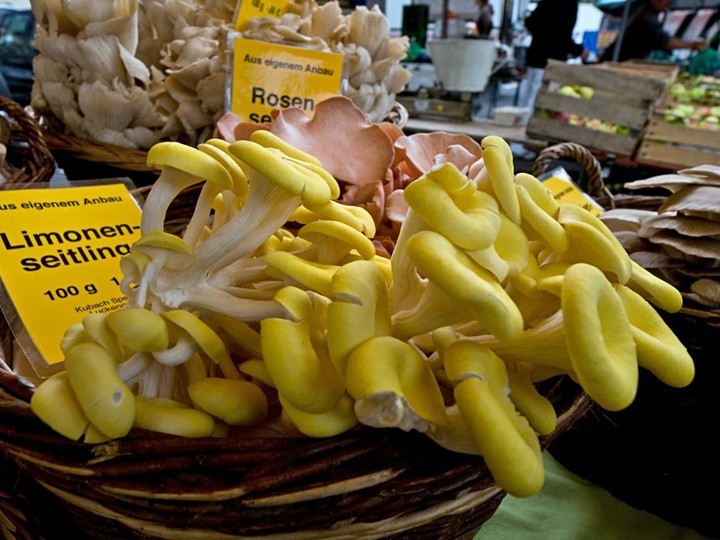
Cultivated ergothioneine-rich Golden Oyster mushroom
A vividly golden, oak-mimicking Pleurotus species cultivated in Meghalaya's expanding oyster-mushroom clusters, golden oyster is scientifically documented as one of the richest whole-food sources of the rare antioxidant amino acid ergothioneine.
| Origin | Meghalaya's oyster-mushroom cultivation sector is well documented (state government 'Meghalaya Mushroom Mission,' oyster mushroom clusters and processing plants), but the specific 'ergothioneine-rich' golden oyster (Pleurotus citrinopileatus) cultivar/strain claim traces to research and commercial extracts developed elsewhere (e.g., Taiwan-origin science, Nammex's ErgoGold product) — treat 'ergothioneine-rich' as a strain/process claim to verify with the specific Meghalaya grower, not an inherent regional trait. |
| Indian subcontinent | Yes |
| Category | Fungi & Functional Mycology |
| Retail price band | Retail: standardized ergothioneine-rich golden oyster extracts (e.g., Nammex ErgoGold, 4.0 mg/g ergothioneine) sit in the premium functional-mushroom-extract tier, typically US$30–70 per 100g in Western nutraceutical channels; fresh/dried culinary golden oyster from Indian growers would price closer to standard specialty-oyster-mushroom rates. |
| Bulk / trade price band | No published bulk index for golden oyster specifically; Meghalaya's general oyster mushroom cluster economics (state-supported production units) provide a cost baseline, but ergothioneine-optimized cultivar bulk supply would need direct grower negotiation. |
| Sourcing status | Dossier researched from public sources — producer contact not yet established |
| Compliance status | Preliminary review complete (see below) — not yet legally verified |
Detailed study
Pleurotus citrinopileatus (golden oyster mushroom) is a culinary-medicinal oyster species notable for unusually high ergothioneine content — peer-reviewed research (published via PubMed, e.g., studies on submerged mycelium cultivation) identifies it as containing among the highest levels of this rare dietary antioxidant amino acid of any mushroom species, alongside antioxidant and taste-compound studies on both fruiting body and mycelium.
Provenance & producer
Meghalaya has an active, government-backed oyster mushroom cultivation program: the state inaugurated an Oyster Mushroom Cluster (2024) and North-East India's largest oyster mushroom processing plant in North Garo Hills, alongside small-scale unit subsidies under the Meghalaya Mushroom Mission — supporting the plausibility of commercial oyster mushroom (including golden oyster variants) cultivation in the state, grown on enriched agricultural-waste/sawdust substrate as is standard for Pleurotus species.
Market & pricing
Nammex markets a standardized golden oyster extract (ErgoGold™) at 4.0 mg/g ergothioneine, positioned as a whole-food alternative to synthetic ergothioneine, with USDA Organic/Kosher/Halal certification — indicating a real premium ingredient market exists for this specific compound, though exact per-kg pricing for the branded extract was not published in the sources reviewed.
Compliance & export
Golden oyster mushroom itself is a conventional food mushroom with no special regulatory barrier in India (FSSAI) or most markets; ergothioneine as an isolated compound has undergone novel-food/GRAS review in some markets (synthetic ergothioneine has US GRAS status), but a whole-mushroom-derived, food-form product like this is generally treated as a conventional foodstuff rather than requiring novel-food authorization — confirm current EU Novel Food Catalogue status if exporting to the EU.
Sources
- PubMed — Submerged Cultivation of Mycelium with High Ergothioneine Content from Pleurotus citrinopileatus
- Nammex — ErgoGold Golden Oyster Mushroom Extract
- ANI News — Meghalaya CM inaugurates Oyster Mushroom Cluster
- Hub Network — Meghalaya launches NE India's biggest Oyster Mushroom processing plant
- Meghalaya Mushroom Mission (official document)
Image status
A working reference photograph is in place, captured from a freely-licensed Wikimedia Commons source (File:Limonenseitlinge (Pleurotus citrinopileatus) - 20100828.jpg). Commons file in Category:Pleurotus citrinopileatus; verify exact CC licence version on the file page (German-language uploads of this type are commonly CC BY-SA 3.0). Treat this as a placeholder for marketing purposes: exact licence terms should be re-verified on the Commons file page, and original producer photography is recommended before final trade use.