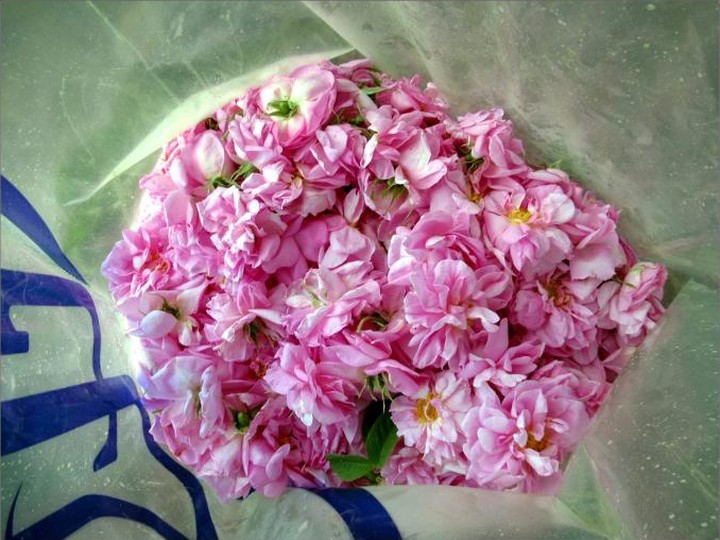
Damascena rose otto, steam-distilled
Precious steam-distilled otto from Isparta's rose valleys — Turkey's other 'Valley of Roses'.
| Origin | Isparta, Turkey |
| Indian subcontinent | No |
| Category | Global Fibers, Oils & Botanicals |
| Retail price band | $$$$$ (indicative $8,000–$15,000/kg — one of the most expensive natural raw materials in perfumery) |
| Bulk / trade price band | Sold in gram/kg lots to fragrance houses; annual harvest yields are tiny (roughly 3,000–5,000 kg rose petals needed per 1kg oil) |
| Sourcing status | Dossier researched from public sources — producer contact not yet established |
| Compliance status | Preliminary review complete (see below) — not yet legally verified |
Detailed study
Rose otto is the essential oil steam-distilled from the petals of Rosa damascena, distinct from rose absolute (solvent-extracted). Isparta province in Turkey's Lakes Region is, alongside Bulgaria's Kazanlak valley, one of the world's two principal Damascena rose-oil origins, with harvest occurring in a short window (May–June) when petals are hand-picked before sunrise to preserve volatile aromatics.
Provenance & producer
Isparta has cultivated oil-rose since the late 19th/early 20th century, developed into a major national industry supplying both Turkish and international fragrance houses; production is a mix of smallholder growers and cooperative/estate distilleries operating traditional copper alembic stills.
Market & pricing
Turkey and Bulgaria together supply the overwhelming majority of the world's natural rose oil, used almost exclusively by fine fragrance houses, luxury cosmetics brands and, in smaller volumes, aromatherapy; Turkish rose otto is prized for a slightly different, sometimes fruitier aromatic profile than Bulgarian oil, giving perfumers two distinct raw-material options.
Compliance & export
No CITES restriction applies. Export is subject to Turkish agricultural/customs certification; downstream fragrance use is governed by IFRA usage limits and EU REACH cosmetic-ingredient rules. Given the extremely high value per kilo, adulteration (dilution with synthetic geraniol/citronellol or cheaper rose-geranium oil) is a known industry risk, so GC-MS certificates of analysis are standard practice for genuine B2B trade.
Sources
Image status
A working reference photograph is in place, captured from a freely-licensed Wikimedia Commons source. Rosa Damascena freshly harvested, David Stanley, CC BY 2.0, via Wikimedia Commons. Note: photographed in the Valley of Roses, Bulgaria, not Isparta, Turkey; illustrates the same Rosa damascena species and harvest style used for Turkish rose otto. Treat this as a placeholder for marketing purposes: exact licence terms should be re-verified on the Commons file page, and original producer photography is recommended before final trade use.