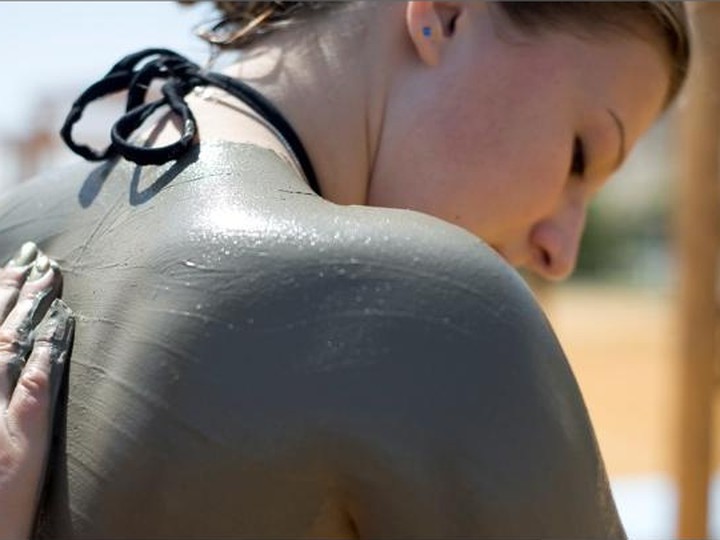
Dead Sea mineral mud concentrate
Hypersaline mineral mud drawn from the Jordanian shore of the world's lowest and saltiest lake.
| Origin | Both Jordan and Israel border the Dead Sea and both countries operate substantial, well-established commercial Dead Sea mud and mineral-cosmetics industries — the mineral mud itself is drawn from the same hypersaline lake shared by both shores, so 'Dead Sea mud' is not exclusive to either country's territory. If sourcing is specifically Jordanian (e.g. from the Jordanian shore near the Dead Sea Panoramic Complex/Sweimeh area), that should be stated and documented; the catalogue claim is plausible and should simply be verified against the actual mining/processing facility used, since Jordan is a genuine and major producer alongside Israel. |
| Indian subcontinent | No |
| Category | Global Wellness & Functional Ingredients |
| Retail price band | $$ (indicative $10–$25/kg for cosmetic-grade processed mud concentrate) |
| Bulk / trade price band | $5–$12/kg on bulk export orders (drum quantities), moisture-content and mineral-concentration dependent |
| Sourcing status | Dossier researched from public sources — producer contact not yet established |
| Compliance status | Preliminary review complete (see below) — not yet legally verified |
Detailed study
Dead Sea mud is a mineral-dense sediment drawn from the shores and shallows of the Dead Sea, an inland hypersaline lake roughly 430m below sea level (the lowest point on Earth's land surface) with a salinity around 34%, far higher than ocean water; the mud is rich in magnesium, potassium, calcium, bromide and sulfur compounds, widely used in cosmetics and spa/wellness treatments for its purported skin-conditioning and mineral-replenishing properties.
Provenance & producer
Jordan operates an established Dead Sea mud and mineral-cosmetics industry along its eastern shore (in the Sweimeh/Dead Sea Panoramic area and surrounding zone), alongside Israel's larger, longer-established industry on the western shore; both countries' mud derives from the same lake system, and Jordanian producers market their own spa-tourism and cosmetics-export sector around the resource.
Market & pricing
Dead Sea mineral cosmetics (mud masks, bath salts, skincare lines) are a globally recognized wellness-tourism and beauty-export category, with strong demand from EU, North American and Gulf skincare/spa markets; the Dead Sea's shrinking surface area due to upstream water diversion has become a widely reported environmental concern, which increasingly features in sustainability-conscious marketing and sourcing discussions for the category.
Compliance & export
No CITES issue applies (mineral, not biological, material). Export requires standard Jordanian mining/commerce and customs certification; cosmetic-ingredient use in EU/US markets requires compliance with each market's cosmetic-ingredient safety and labelling rules, and given the Dead Sea's well-documented ecological decline (water-level drop, sinkhole formation from upstream diversion), buyers increasingly value transparency about extraction methods and environmental-impact practices from suppliers.
Sources
Image status
A working reference photograph is in place, captured from a freely-licensed Wikimedia Commons source. Dead Sea mud treatment application, Leonardo Club, CC BY-SA 4.0, via Wikimedia Commons Treat this as a placeholder for marketing purposes: exact licence terms should be re-verified on the Commons file page, and original producer photography is recommended before final trade use.