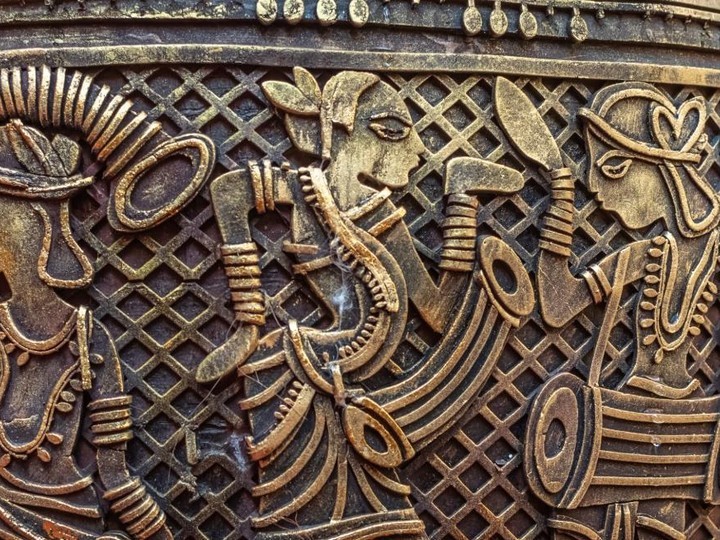
Dhokra lost-wax bronze tribal figurine
4,000-year-old lost-wax bronze casting, still practised by Bastar's tribal artisan clans.
| Origin | Bastar, Chhattisgarh, India |
| Indian subcontinent | Yes |
| Category | Gems, Metalwork & Craft |
| Retail price band | budget |
| Bulk / trade price band | budget (strong wholesale/export volume item) |
| Sourcing status | Dossier researched from public sources — producer contact not yet established |
| Compliance status | Preliminary review complete (see below) — not yet legally verified |
Detailed study
Dhokra (also Dokra) is a non-ferrous metal (bronze/brass alloy) casting technique using the lost-wax (cire perdue) method: a clay core is wrapped in threads of beeswax in the desired figurative pattern, coated in clay, then fired so the wax melts out and molten metal is poured in — each finished piece is thus a unique mould, never duplicated. Traceable evidence of the technique in the subcontinent goes back to the Indus Valley period (the 'Dancing Girl' of Mohenjo-daro).
Provenance & producer
The craft is most strongly associated today with the Dhokra Damar tribal metalworking communities of Bastar district, Chhattisgarh, alongside related traditions in West Bengal, Odisha and Jharkhand; Bastar Dhokra crafts hold Geographical Indication (GI) protection.
Market & pricing
Dhokra figurines are a high-volume, accessible export handicraft — small tribal figurines and animal motifs retail from a few hundred to a few thousand rupees, making them a strong wholesale/export catalogue item for gift and home-decor retailers, distinct from premium fine-art bronzes by artists like Meera Mukherjee.
Compliance & export
GI-registered Bastar Dhokra items should be sourced with traceable artisan/cooperative documentation to support authentic GI labelling claims; as cast metal (copper-zinc alloy) craftware, export shipments should carry accurate material composition on customs declarations, and any use of lead-bearing brass should be checked against destination-market restrictions (e.g., EU/US consumer-product lead limits) for items marketed to children.
Sources
- GiTAGGED — Bastar Dhokra Art
- Krafteria — Bastar Dhokra: Tribal Metal Art of Chhattisgarh
- Wikipedia — Dhokra
Image status
A working reference photograph is in place, captured from a freely-licensed Wikimedia Commons source (File:Dhokra_art_with_clay.jpg). In Commons Category:Dokra depicting the clay/wax casting process. Verify licence on the Commons page before use. Treat this as a placeholder for marketing purposes: exact licence terms should be re-verified on the Commons file page, and original producer photography is recommended before final trade use.