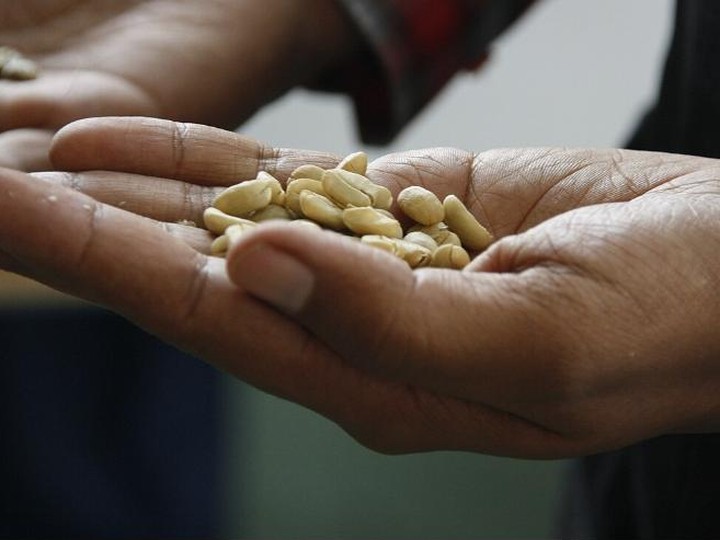
Ethiopian wild forest coffee, shade-grown heirloom
From the birthplace of coffee — wild, shade-grown heirloom Arabica from the forests of Kaffa
| Origin | Kaffa, Ethiopia |
| Indian subcontinent | No |
| Category | Global Rare Foods & Ingredients |
| Retail price band | $$–$$$ per kg green coffee, indicative $9–$20/kg depending on grade and certification |
| Bulk / trade price band | $5–$9/kg green coffee on bulk container-load export orders |
| Sourcing status | Dossier researched from public sources — producer contact not yet established |
| Compliance status | Preliminary review complete (see below) — not yet legally verified |
Detailed study
Ethiopia is the genetic centre of origin for Coffea arabica, and the Kaffa (Kafa) Zone in southwestern Ethiopia — from which the word 'coffee' is widely believed to derive — hosts genuinely wild coffee populations growing naturally in montane forest understory, distinct from cultivated garden or plantation coffee. 'Heirloom' is the trade term for Ethiopia's thousands of uncatalogued native Arabica varieties/landraces rather than a single cultivar.
Provenance & producer
Wild and semi-wild forest coffee in Kaffa is typically hand-harvested from naturally regenerating forest trees under full forest canopy shade, with minimal or no chemical inputs, by smallholder and forest-community collectors; the Kafa Biosphere Reserve (UNESCO Man and the Biosphere designation, 2010) specifically protects this wild coffee forest gene pool.
Market & pricing
Specialty coffee roasters worldwide place high value on Ethiopian forest/wild-harvested and heirloom-variety coffees for their genetic diversity and distinctive floral, winey cup profiles, and 'forest coffee' or 'wild coffee' lots command notable premiums in the specialty/direct-trade segment over standard washed/commercial Ethiopian coffee grades.
Compliance & export
Ethiopian coffee exports are regulated through the Ethiopian Commodity Exchange (ECX) system, with forest/specialty-origin coffee eligible for direct/vertical export arrangements outside standard ECX pooling under specific traceability schemes; Kaffa forest coffee sourcing intersects with UNESCO Biosphere Reserve conservation objectives, so buyers seeking authenticated 'wild forest' claims should require traceability documentation and consider Rainforest Alliance, organic or Fair Trade certification where available.
Sources
- The Ultimate Guide to Kaffa Forest Coffee — Impact Roasters
- Kaffa Coffee Sourcing Guide: Forest Origin & Grades — Ethio Coffee
Image status
A working reference photograph is in place, captured from a freely-licensed Wikimedia Commons source. Raw/green Ethiopian coffee beans held for quality grading, Pete Lewis/DFID (UK Department for International Development), CC BY 2.0, via Wikimedia Commons Treat this as a placeholder for marketing purposes: exact licence terms should be re-verified on the Commons file page, and original producer photography is recommended before final trade use.