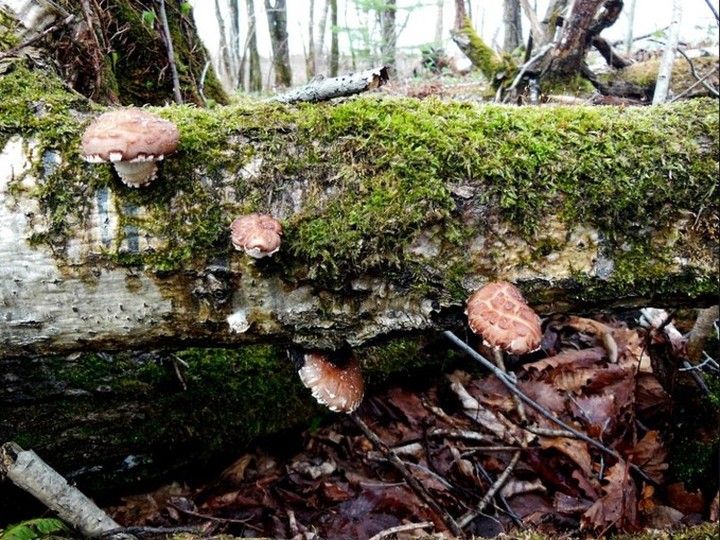
Forest-grown Shiitake, oak-log method
Oak-log-grown forest shiitake, cultivated by the traditional Japanese method of inoculating felled oak logs (hodagi) and fruiting them over one to several years in shaded forest conditions.
| Origin | Kyoto Prefecture / broader Kansai-Kyushu region, Japan — well supported in general (Japan's log-grown shiitake tradition is centuries-old and real); Kyoto specifically is plausible but the most-documented log-shiitake heritage regions in sources found are Oita/Kunisaki Peninsula (Kyushu), so consider broadening the claim to "Kansai/Western Japan" unless a specific Kyoto producer can be named |
| Indian subcontinent | No |
| Category | Fungi & Functional Mycology |
| Retail price band | Premium dried Japanese forest-grown (donko-grade) shiitake commands significantly higher prices than log- or sawdust-grown Chinese/Indian equivalents; exact current retail figures were not independently verified in this research and should be confirmed with a specific Japanese supplier before publishing a number |
| Bulk / trade price band | Not independently verified in this research — Japanese forest-log shiitake bulk/wholesale pricing was not found in searchable trade listings; recommend sourcing directly from a named Japanese cooperative or export document before publishing |
| Sourcing status | Dossier researched from public sources — producer contact not yet established |
| Compliance status | Preliminary review complete (see below) — not yet legally verified |
Detailed study
Log-cultivated shiitake is Japan's original and most traditional cultivation method, dating back centuries, using felled broadleaf logs (commonly oak/konara) inoculated with spawn and left in forest shade for one to several years before fruiting — a slower, lower-yield method than modern sawdust-block cultivation, but associated with denser texture and stronger flavour, and it also supports satoyama (managed forest-edge) ecosystems.
Provenance & producer
Documented log-shiitake heritage areas in Japan include the Kunisaki Peninsula and Usa region of Oita Prefecture (Kyushu), profiled in a 2021 Japanese government publication, and various satoyama-linked growers described by specialty exporter Sugimoto; a Kyoto-specific named producer was not identified in this research, so the claim should stay at the level of "traditional Japanese oak-log method" unless a specific Kyoto farm can be verified.
Market & pricing
No independently verifiable current retail/wholesale price figures for Kyoto-specific forest-grown shiitake were found in this research; Japanese forest-log ("donko"/"koshin") dried shiitake is generally understood in the trade to command a substantial premium over machine-cultivated shiitake, but a specific cited number could not be confirmed here.
Compliance & export
Import into India of dried Japanese shiitake would require standard FSSAI import clearance (food import licence, port health/FSSAI NOC) and compliance with Indian labelling rules; export from Japan is subject to standard Japanese agricultural/food export documentation, not any special CITES or protected-species regime, as shiitake is a cultivated, non-wild species.
Sources
- Highlighting Japan: Log-cultivated shiitake, Kunisaki Peninsula/Usa, Oita
- Sugimoto: Forest-grown shiitake cultivation
- USDA Forest Products Lab: shiitake log cultivation potential (1982)
- Sakuraco: Shiitake history in Japanese culture
Image status
A working reference photograph is in place, captured from a freely-licensed Wikimedia Commons source (File:Wild_Shiitake-Mushroom_Japan.JPG). Wikimedia Commons file, Japan-specific shiitake image; verify exact licence (commonly CC-BY-SA) on the file page before use Treat this as a placeholder for marketing purposes: exact licence terms should be re-verified on the Commons file page, and original producer photography is recommended before final trade use.