Fungal-fermented indigo alternative dye
An early-stage, fermentation-derived blue pigment positioned as a future low-water alternative to synthetic indigo — currently a research-and-pilot category, not yet a scaled Indian trade commodity.
| Origin | Gujarat, India — reframe as a lab-scale/pilot biotech dye concept, not an established regional trade good; do not claim a commercial Gujarat production base |
| Indian subcontinent | Yes |
| Category | Fungi & Functional Mycology |
| Retail price band | Not applicable as a retail SKU — no verified commercial per-kg market price exists; if offered, price as a lab-sample/R&D allocation (e.g. gram-scale pricing), not a bulk dyestuff |
| Bulk / trade price band | No verifiable bulk/trade price found; synthetic indigo trades roughly $2–3/kg (chemical dye benchmark) and natural plant indigo cake trades roughly ₹1,500–3,000/kg in India — fungal-fermented pigment has no comparable published trade price |
| Sourcing status | Dossier researched from public sources — producer contact not yet established |
| Compliance status | Preliminary review complete (see below) — not yet legally verified |
Detailed study
Indigo dye is traditionally produced either synthetically (from petrochemicals) or via bacterial fermentation of Indigofera tinctoria/Persicaria tinctoria plant leaves — not by fungi. Genuine fungal-fermented blue pigment research exists (e.g. JBEI/UC Berkeley engineered-fungi work reported by phys.org in 2019, and Argentina/US-based startup Michroma, which uses CRISPR-edited fungal strains in bioreactors to secrete colour dyes), but these are lab/pilot-stage projects, not established commercial dyestuffs, and none are documented as based in Gujarat or India.
Provenance & producer
No verifiable Gujarat-based producer, cooperative, or ICAR/state programme for fungal-fermented indigo-alternative dye was found in this research. Gujarat does have a real, well-documented natural (plant-based, bacterial-fermentation) indigo/khadi-dyeing tradition around Bhuj/Kutch, which is a defensible and verifiable regional claim if the product description is corrected accordingly.
Market & pricing
No IndiaMART/TradeIndia or trade-press listings for a fungal-fermented indigo-alternative dye were found. Synthetic indigo benchmarks near $2–3/kg globally; natural indigo (plant, non-fungal) cake sells in the ₹1,500–3,000/kg range on Indian natural-dye supplier sites — cited only as an adjacent reference point, not a substitute for verified data on this specific product.
Compliance & export
As a textile dye (non-food), FSSAI food rules do not apply; relevant frameworks would be India's environmental/effluent norms for dye manufacture and, if genetically engineered fungal strains are used, biosafety clearance under India's Genetic Engineering Appraisal Committee (GEAC) — no evidence found that any Indian facility currently holds such clearance for this specific product.
Sources
- Blue pigment from engineered fungi (JBEI/phys.org, 2019)
- Down to Earth: engineering fungi for eco-friendly dyes
- Michroma fungal fermentation dye (The Spoon)
- Fungal Pigment Research in India: An Overview (Springer)
- Technical booklet on natural indigo dye extraction (AMM-MCRC)
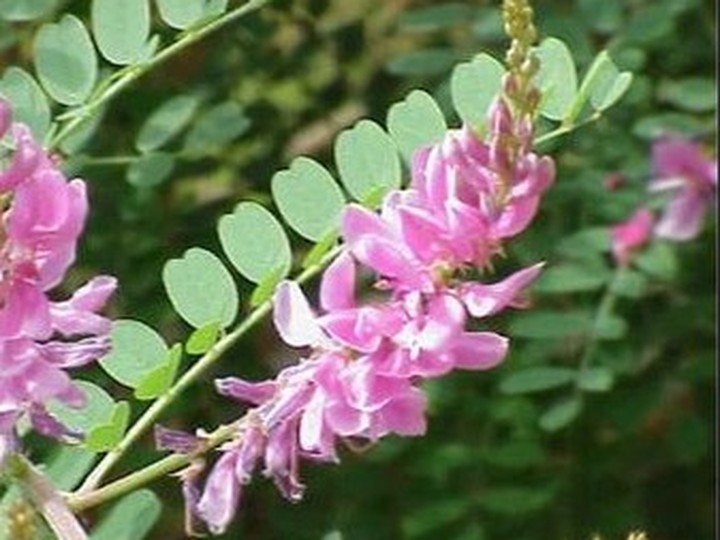
Image status
A working reference photograph is in place, captured from a freely-licensed Wikimedia Commons source (File:Indigofera_tinctoria0.jpg). Commons file of Indigofera tinctoria (the real plant-indigo source) — use only if product copy is corrected to plant/bacterial-fermentation indigo; verify exact licence (typically CC-BY-SA) on the file page before use Treat this as a placeholder for marketing purposes: exact licence terms should be re-verified on the Commons file page, and original producer photography is recommended before final trade use.