Fungal mycelium acoustic/insulation panel (design material)
A design material grown, not manufactured: mycelium (fungal root network) bound into lightweight, sound-absorbing panels using agricultural waste substrate.
| Origin | UNVERIFIED / likely aspirational: Auroville is a genuine international design/sustainability township in Tamil Nadu with real bio-material and earth-building research (notably the Auroville Earth Institute, focused on compressed-earth block construction) and an Auroville Centre for Scientific Research, but no independently verifiable evidence was found of an established Auroville-based mycelium acoustic-panel manufacturer; the mycelium-panel category itself is real and commercially proven (e.g. Mogu in Italy, Myceen), but the specific Auroville sourcing claim could not be substantiated and should be verified directly with a named Auroville workshop/studio before being stated as fact. |
| Indian subcontinent | Yes |
| Category | Fungi & Functional Mycology |
| Retail price band | Retail: established international mycelium acoustic panel brands (Mogu, Myceen) price finished acoustic tiles/panels in the premium architectural-material range, broadly comparable to high-end felt or cork acoustic panels; exact India-specific retail pricing for an Auroville-sourced product could not be verified and should be confirmed with the actual supplier. |
| Bulk / trade price band | Bulk/trade: no independently verifiable bulk price benchmark specific to an Auroville producer was found; global mycelium-panel makers (Mogu, MycoWorks-adjacent firms) sell B2B into architecture/acoustic-fitout markets at custom quote, project-scale pricing. |
| Sourcing status | Dossier researched from public sources — producer contact not yet established |
| Compliance status | Preliminary review complete (see below) — not yet legally verified |
Detailed study
Fungal mycelium composites — grown by feeding mycelium (e.g. Trametes, Ganoderma or Pleurotus species) on agricultural waste substrate (straw, sawdust, hemp) which the mycelium binds into a solid, then heat-deactivated — are a real, peer-reviewed sustainable-materials category (see reviews in the International Journal of Biomaterials, 2022, and ScienceDirect biocomposite literature) valued for biodegradability, low embodied energy, and genuine acoustic-absorption performance comparable to synthetic foams.
Provenance & producer
Globally, mycelium acoustic panels are produced by specialist bio-material studios (e.g. Mogu in Italy, Myceen) using controlled substrate-growing and pressing processes; Auroville is a credible location for such a workshop given its established sustainable-design ecosystem (Auroville Earth Institute, Centre for Scientific Research), but this dossier could not independently confirm a specific named mycelium-panel producer operating there — this claim should be treated as needing direct verification before being repeated as fact.
Market & pricing
The broader mycelium-biomaterial and bio-based acoustic panel market is a genuine and growing green-building category internationally, with established players in Europe; no India-specific market-size or pricing data for mycelium acoustic panels was found in this research pass.
Compliance & export
As a building/design material, compliance is governed by standard construction-material fire-safety and acoustic-performance certification (relevant Indian standards would fall under BIS building-material norms), not by food or wildlife regulation; there is no CITES or agricultural-input registration relevant to this product category.
Sources
- Mogu mycelium acoustic panels (commercial reference)
- Mycelium-based composite review (International Journal of Biomaterials)
- Auroville Earth Institute overview
- Auroville Centre for Scientific Research
Image status
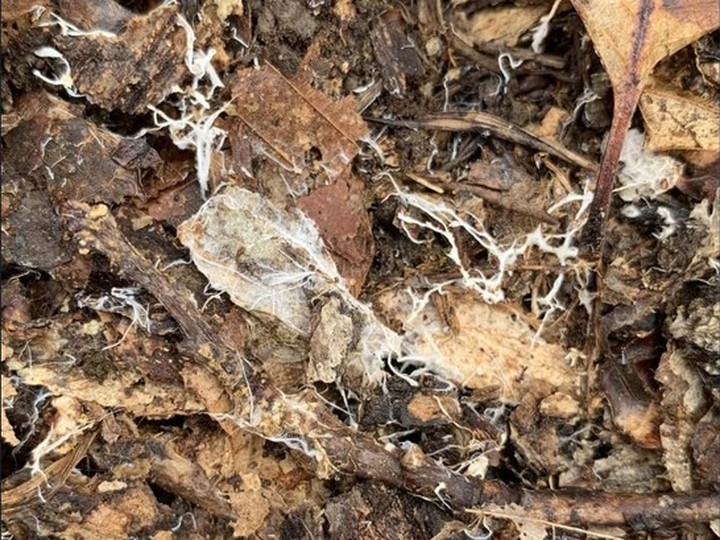
A working reference photograph is in place, captured from a freely-licensed Wikimedia Commons source (File:Mycelium in forest floor.jpg). On Wikimedia Commons under the file's stated free licence — confirm exact CC tag on the file page; this is a generic mycelium image, not a photo of a finished panel, since no verified Auroville-specific panel image was located. Treat this as a placeholder for marketing purposes: exact licence terms should be re-verified on the Commons file page, and original producer photography is recommended before final trade use.