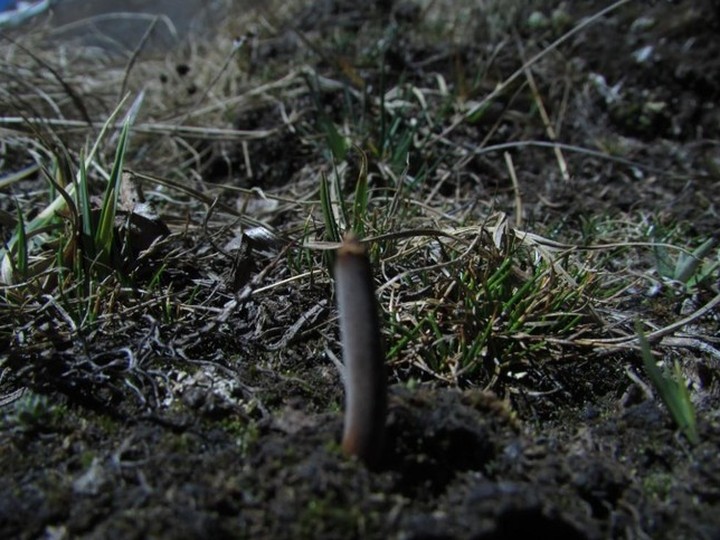
Himalayan Cordyceps sinensis (Yartsa Gunbu), wild-harvested
The Himalayan caterpillar fungus, hand-harvested above 4,000m in the short May–July window and graded piece by piece.
| Origin | Sikkim / Arunachal Pradesh, India |
| Indian subcontinent | Yes |
| Category | Fungi & Functional Mycology |
| Retail price band | Retail (fresh, graded pieces): USD 15,000–110,000/kg equivalent, sold by piece, not bulk weight |
| Bulk / trade price band | Trade/bulk (dried, mixed grade): USD 3,000–40,000/kg depending on grade — wide band reflects extreme grade sensitivity |
| Sourcing status | Dossier researched from public sources — producer contact not yet established |
| Compliance status | Preliminary review complete (see below) — not yet legally verified |
Detailed study
Ophiocordyceps sinensis is an entomopathogenic ascomycete that parasitises Thitarodes (ghost moth) larvae in alpine meadow soil between roughly 3,000 and 5,000 metres across the Tibetan Plateau and the high Himalaya. The fungus mummifies the larva underground over winter; a single dark stroma erupts from the caterpillar's head each spring. Collectors hand-dig the intact caterpillar-and-stroma — mechanised harvesting is not possible — during a short window after snowmelt, roughly May to July. Material is cleaned of soil, sun- or shade-dried, and graded on size, colour, stalk-to-body ratio, intactness and moisture content; fresh, large, unbroken specimens are sold individually rather than by weight and command the steepest premiums.
Provenance & producer
In India, wild collection is documented in North Sikkim (notably the Dzongu reserve area) and at comparable altitudes in Arunachal Pradesh, Himachal Pradesh and Uttarakhand. Sikkim's harvest has historically been organised through village-level customary institutions (the Dzumsa system in Lachen/Lachung) that set collection windows and access rules — a genuine, citable local-governance structure rather than open-access foraging. Aggregation typically runs through local traders to Gangtok, Siliguri or Guwahati before reaching Delhi wholesale or export channels.
Market & pricing
Global benchmark pricing for premium wild-grade material runs USD 40,000–110,000/kg for the very best fresh specimens (National Geographic reporting on the Tibetan trade), with lower grades and dried bulk material trading well below that. Indian-origin material has not been benchmarked at the same depth as the Tibet/Nepal trade in the sources reviewed so far — this is a named gap for the next research pass, ideally via direct contact with a Sikkim State Forest Department or Sikkim Organic Mission contact rather than international benchmark prices alone.
Compliance & export
Ophiocordyceps sinensis is a fungus, not a plant or animal, and is not listed on any CITES appendix and not scheduled under India's Wildlife Protection Act 1972. Wild collection of biological material for commercial or export use in India falls under the Biological Diversity Act 2002, which requires prior approval from the National Biodiversity Authority (or the relevant State Biodiversity Board) for access and benefit-sharing, in addition to any state Forest Department non-timber-forest-produce (NTFP) collection permit. TRAFFIC and WWF-India have documented cross-border illegal trade in caterpillar fungus between India, Nepal, Bhutan and Tibet — sourcing for this catalogue must be traceable to a specific, permitted Indian harvest with chain-of-custody documentation to avoid inadvertently reselling laundered cross-border material.
Sources
- National Geographic — the Tibetan cordyceps trade and pricing
- Mountain Research and Development — distribution, harvesting and trade of Yartsa Gunbu in Sikkim
- TRAFFIC — factsheet on India's caterpillar fungus in illegal wildlife trade
Image status
A working reference photograph is in place, captured from a freely-licensed Wikimedia Commons source (File:Yarchagumba.JPG). Wikimedia Commons candidate — licence to be re-verified before use; not yet downloaded into this site (see build note). Treat this as a placeholder for marketing purposes: exact licence terms should be re-verified on the Commons file page, and original producer photography is recommended before final trade use.