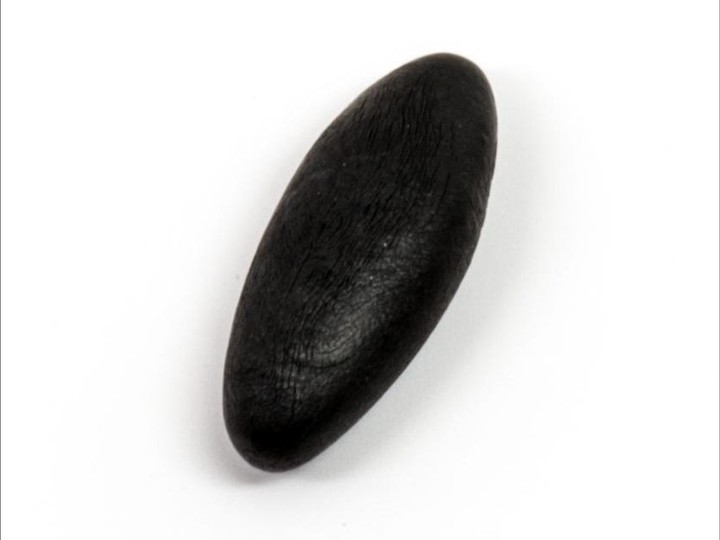
Himalayan Shilajit resin, purified (fulvic-acid standardised)
Mineral-rich resin exuded from Himalayan rock, purified and standardised for potency.
| Origin | The catalogue's dual-origin phrasing ('Gilgit-Baltistan trade route / Himachal Pradesh, India') is confusing and should be clarified: Gilgit-Baltistan is a Pakistan-administered territory in the western Himalayas, while Himachal Pradesh is a separate Indian state — these are two distinct source regions, not one. If the product is genuinely sourced from Himachal Pradesh (e.g. Kinnaur, Lahaul-Spiti), the listing should say so plainly and drop the Gilgit-Baltistan reference, since routing product through a cross-border 'trade route' framing raises unnecessary import-provenance and customs-declaration questions. |
| Indian subcontinent | Yes |
| Category | Ayurveda & Wellness Extracts |
| Retail price band | premium |
| Bulk / trade price band | Pricing under research |
| Sourcing status | Dossier researched from public sources — producer contact not yet established |
| Compliance status | Preliminary review complete (see below) — not yet legally verified |
Detailed study
Shilajit (also called mumijo/mumiyo) is a blackish-brown mineral-organic exudate that seeps from high-altitude Himalayan rock crevices, formed over centuries from the slow decomposition of plant matter compressed under geological pressure; commercial 'purified resin' products are processed to remove grit and heavy-metal contamination and are often standardised to a guaranteed minimum fulvic-acid percentage (commonly 40-60%+).
Provenance & producer
Authentic shilajit is collected from high-altitude rock faces (typically 3,000-5,000m) across the wider Himalayan and Hindu Kush belt spanning northern India, Nepal, Bhutan and Pakistan-administered Gilgit-Baltistan; reputable Indian-market suppliers should specify the actual Indian collection region (e.g. Himachal Pradesh, Uttarakhand) and provide heavy-metal test certificates given known contamination risk in unpurified resin.
Market & pricing
Positioned as a premium adaptogen/wellness supplement competing globally with brands sourcing from Altai (Russia) and the Himalayas; retail pricing for standardised, lab-tested resin commonly runs $30-80 for a 30-50g jar, reflecting purification and testing costs. Target buyers are wellness/nutraceutical retailers, biohacking and men's-health consumers, and Ayurvedic pharmacies.
Compliance & export
As an ingestible product this requires food-safety/dietary-supplement compliance in the country of sale (in India, FSSAI registration and labelling; in the US, dietary-supplement/DSHEA labelling with a Supplement Facts panel; in the EU, novel-food and heavy-metal limit compliance); shilajit is a known contamination risk (heavy metals, free radicals, biological contaminants) if not properly purified, so batch-level lab testing (heavy metals, fulvic acid assay) should be disclosed, and any cross-border sourcing claim (e.g. via Gilgit-Baltistan) should be checked against import/customs documentation requirements.
Sources
Image status
A working reference photograph is in place, captured from a freely-licensed Wikimedia Commons source (File:Purified Shilajit, Mumio.jpg). Freely licensed per Wikimedia Commons hosting policy. Directly on-topic: shows purified shilajit resin. Treat this as a placeholder for marketing purposes: exact licence terms should be re-verified on the Commons file page, and original producer photography is recommended before final trade use.