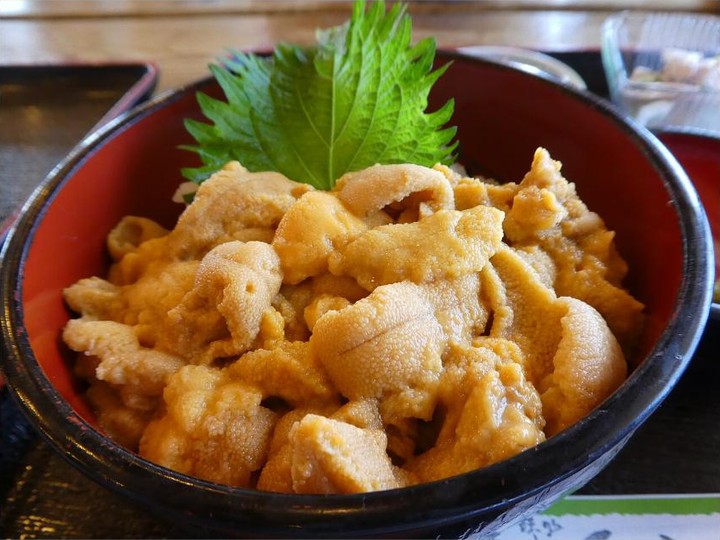
Hokkaido uni (sea urchin roe), wild-harvested
Deep-orange Ezo-bafun and murasaki uni, hand-harvested from Hokkaido's cold northern waters.
| Origin | Hokkaido, Japan |
| Indian subcontinent | No |
| Category | Global Rare Foods & Ingredients |
| Retail price band | $$$$ ($60–$150+ per 100g tray, premium fresh grade) |
| Bulk / trade price band | Frozen/salted bulk export: indicative $250–$600/kg depending on species (bafun vs murasaki) and grade |
| Sourcing status | Dossier researched from public sources — producer contact not yet established |
| Compliance status | Preliminary review complete (see below) — not yet legally verified |
Detailed study
'Uni' is the edible gonad (roe) of sea urchin, prized in Japanese cuisine for its briny-sweet, custard-like richness; Hokkaido's main commercial species are Ezo-bafun uni (Strongylocentrotus intermedius) and kita-murasaki uni (Strongylocentrotus nudus), both cold-water species distinct from the smaller southern-Japan varieties.
Provenance & producer
Divers and boat crews hand-harvest wild urchins from kelp beds off Hokkaido's coasts during short licensed seasons (roughly June–August for bafun, varying by locality); roe is hand-extracted and typically shipped fresh on wooden trays or lightly salted for premium grade.
Market & pricing
Japan consumes an estimated 50,000+ tonnes of uni annually and accounts for the large majority of global uni consumption, importing heavily from the US, Chile, Russia and South Korea to supplement domestic Hokkaido/Tohoku wild catch; premium fresh Hokkaido uni commands the highest prices in the global sushi and fine-dining trade.
Compliance & export
Uni is not CITES-listed, but Hokkaido fisheries cooperatives (gyokyo) operate strict local catch quotas, size limits and seasonal closures to manage overfishing and kelp-bed ('urchin barren') sustainability concerns; export requires Japanese food-safety (HACCP) certification and destination-country seafood import clearance.
Sources
Image status
A working reference photograph is in place, captured from a freely-licensed Wikimedia Commons source. Uni don served in Shakotan, Hokkaido, CC BY-SA 4.0, via Wikimedia Commons Treat this as a placeholder for marketing purposes: exact licence terms should be re-verified on the Commons file page, and original producer photography is recommended before final trade use.