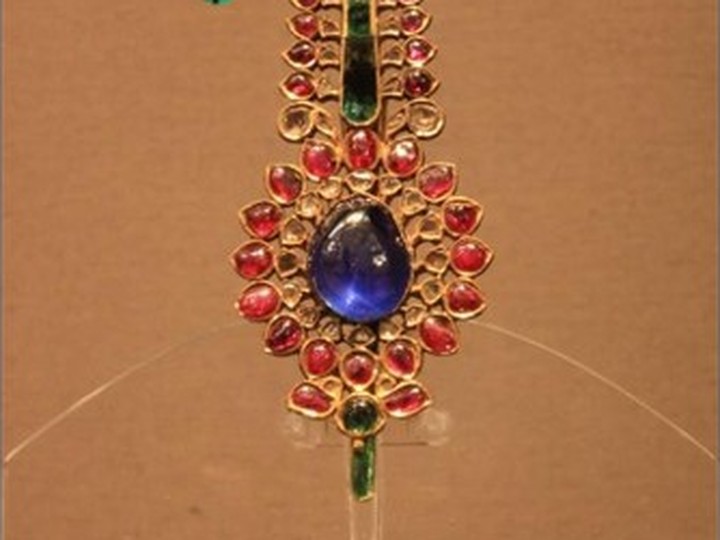
Jaipur kundan-set uncut diamond jewellery
Uncut polki diamonds set in 24k gold foil — Mughal-era Jaipur jewellery artistry, unbroken since the 16th century.
| Origin | Jaipur, Rajasthan, India |
| Indian subcontinent | Yes |
| Category | Gems, Metalwork & Craft |
| Retail price band | luxury |
| Bulk / trade price band | premium |
| Sourcing status | Dossier researched from public sources — producer contact not yet established |
| Compliance status | Preliminary review complete (see below) — not yet legally verified |
Detailed study
Kundan is a setting technique where gemstones (traditionally uncut/polki diamonds, or glass/precious stones) are held in place by pressing highly pure 24k gold foil around them rather than by prongs or claws, often paired on the reverse with meenakari enamelling. The technique demands specialist goldsmiths (sonars) for foil-work and separate artisans for stone-cutting and enamelling, making a single high piece a multi-craftsman collaboration.
Provenance & producer
Jaipur is the leading contemporary hub for kundan-meena-polki jewellery, tracing its patronage to the Mughal courts and the Rajput royal ateliers that migrated to Jaipur under Sawai Jai Singh II's craft-town policies in the 18th century; the craft is not GI-registered as a single mark but is closely associated with Jaipur's historic jewellers' quarter (Johari Bazaar).
Market & pricing
Kundan-polki sets range from mid-range bridal pieces (tens of thousands of rupees) to museum-grade heritage sets costing lakhs to crores, sold through Jaipur ateliers, Indian bridal jewellery houses, and increasingly international auction and luxury retail; buyers are largely bridal/gifting retail plus HNI collectors and export wholesale to South Asian diaspora markets.
Compliance & export
Gold content must meet BIS hallmarking standards (mandatory hallmarking in India since 2021) stating purity (e.g., 22K916); uncut/polki diamonds require standard Kimberley Process origin documentation for cross-border diamond trade, and export invoices should carry accurate gemstone disclosure (natural vs. treated) per international consumer-protection and customs labelling norms.
Sources
- GIA — Jewelers to the Maharajas of Jaipur
- Natural Diamond Council — Decoding Uncut/Polki Diamonds
- Surana Jewellers of Jaipur — Jadau Kundan Meena Collection
Image status
A working reference photograph is in place, captured from a freely-licensed Wikimedia Commons source (File:WLA_vanda_Turban_jewels.jpg). Attributed via Wikipedia Loves Art (WLA) project, typically CC BY-SA. Confirm exact licence on the Commons file page before use. Treat this as a placeholder for marketing purposes: exact licence terms should be re-verified on the Commons file page, and original producer photography is recommended before final trade use.