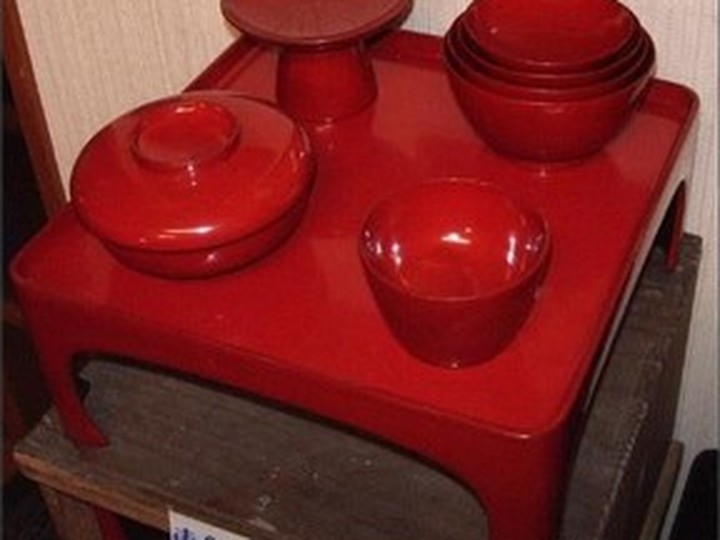
Japanese urushi lacquerware (maki-e gold work)
Layer upon layer of urushi lacquer, dusted with gold by Wajima's master artisans.
| Origin | Wajima, Ishikawa, Japan |
| Indian subcontinent | No |
| Category | Gems, Metalwork & Craft |
| Retail price band | luxury |
| Bulk / trade price band | Pricing under research |
| Sourcing status | Dossier researched from public sources — producer contact not yet established |
| Compliance status | Preliminary review complete (see below) — not yet legally verified |
Detailed study
Wajima-nuri lacquerware involves up to 100+ steps of applying and polishing layers of urushi (natural lacquer from the sap of Toxicodendron vernicifluum) over a wood substrate reinforced with fabric and diatomaceous-earth undercoat unique to Wajima, followed by maki-e decoration where artisans sprinkle gold or silver powder into wet lacquer to create raised or flat metallic designs. A single high-end piece can take months to a year to complete across specialist division-of-labour artisans.
Provenance & producer
Wajima, Ishikawa Prefecture, Japan, is a Traditional Craft-designated production area under Japan's Ministry of Economy, Trade and Industry, with Wajima-nuri recognised as an Important Intangible Cultural Property technique; the January 2024 Noto Peninsula earthquake severely damaged the Wajima lacquerware district and displaced many workshops, materially affecting current supply.
Market & pricing
This is a luxury craft-collector category; everyday Wajima-nuri tableware starts around ¥10,000-30,000 per piece, while fine maki-e art objects and bridal-trousseau pieces can run into the millions of yen. Target buyers are luxury homeware retailers, tea-ceremony practitioners, and Japanese-craft collectors; post-earthquake scarcity has increased collector interest and price sensitivity.
Compliance & export
No CITES restriction applies, but genuine urushi (Toxicodendron vernicifluum sap) can cause allergic skin reactions and products should be labelled accordingly; buyers should verify pieces are labelled 'Wajima-nuri' only if made within the certified Wajima production area and process, since 'Japanese lacquerware' more broadly includes non-Wajima regional styles (Kishu, Aizu, Yamanaka) that should not be marketed under the Wajima name.
Sources
Image status
A working reference photograph is in place, captured from a freely-licensed Wikimedia Commons source (File:Wajimanurie.JPG). Freely licensed per Wikimedia Commons hosting policy — confirm exact CC licence on file page. Treat this as a placeholder for marketing purposes: exact licence terms should be re-verified on the Commons file page, and original producer photography is recommended before final trade use.