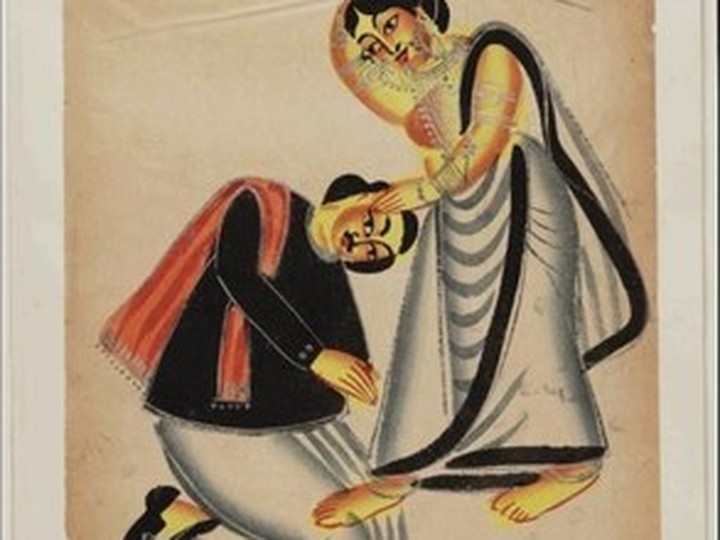
Kalighat folk-art painting, original
Bold brushwork born in the bazaars beside Kolkata's Kali Temple
| Origin | The catalogue's 'original' claim needs clarification: 19th-century Kalighat paintings by the original temple-bazaar patuas are historic museum/collector antiques (largely held in institutions like the V&A, British Museum, and Cleveland Museum of Art) and are not generally available as new retail stock. A contemporary piece should be marketed honestly as a 'modern hand-painted work in the Kalighat tradition' rather than implying it is an antique 'original,' unless the listing is genuinely an antique with provenance documentation. |
| Indian subcontinent | Yes |
| Category | Art & Heritage Objects |
| Retail price band | mid |
| Bulk / trade price band | budget (contemporary reproduction-style pieces) |
| Sourcing status | Dossier researched from public sources — producer contact not yet established |
| Compliance status | Preliminary review complete (see below) — not yet legally verified |
Detailed study
Kalighat painting is a swift, bold, watercolor-on-paper style developed by patua (scroll-painter) artists using flowing brush outlines, minimal shading, and flat, saturated color washes — a radical simplification compared to earlier miniature traditions — originally produced quickly and cheaply for pilgrims. Subjects ranged from Hindu deities to sharp social satire of colonial-era Kolkata society.
Provenance & producer
The style emerged in the early-to-mid 19th century in the bazaars surrounding the Kalighat Kali Temple in Kolkata, West Bengal, as temple pilgrims sought inexpensive souvenir imagery; it is considered an early precursor of modern Indian graphic/pop art and directly influenced 20th-century artists like Jamini Roy. Original 19th-century pieces are now primarily museum and archival holdings rather than a commercially active production village-based GI craft.
Market & pricing
Because authentic 19th-century Kalighat paintings are scarce antiques held largely in institutional collections, the active commercial market is dominated by contemporary artists working in the Kalighat visual idiom, priced as folk/decorative art rather than as antiques; target buyers are collectors of Indian folk-art history, interior decor buyers seeking bold graphic Indian wall art, and museum-shop/cultural-gift channels.
Compliance & export
Any listing using the word 'original' should be accompanied by clear provenance and dating documentation to avoid misleading antique-authenticity claims; genuine pre-1900s antiques may also trigger India's Antiquities and Art Treasures Act export-licensing requirements, so sellers must confirm whether a piece is a contemporary artisan reproduction (no special export license needed beyond standard handicraft documentation) or a true antique (requiring Archaeological Survey of India clearance to export legally).
Sources
- Kalighat painting - Wikipedia
- Kālīghāṭ painting - Britannica
- Kalighat Paintings: The Folk Art That Defines Kolkata - Rooftop
Image status
A working reference photograph is in place, captured from a freely-licensed Wikimedia Commons source (File:Kalighat Painting Calcutta 19th Century - Woman Striking Man With Broom.jpg). Public domain (19th-century artwork, out of copyright) per typical Commons practice — verify exact tag on file page; this is an antique museum piece, not a depiction of new stock. Treat this as a placeholder for marketing purposes: exact licence terms should be re-verified on the Commons file page, and original producer photography is recommended before final trade use.