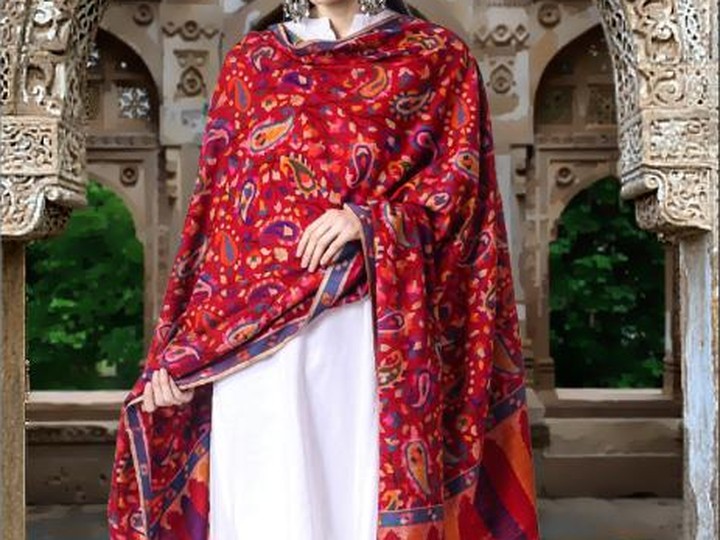
Kani Pashmina shawl, jamawar weave
Months on the loom, one bobbin at a time — Kanihama's legendary kani-woven pashmina.
| Origin | 'Jamawar' and 'Kani shawl' are related but not strictly synonymous: Kani shawl specifically refers to the technique of weaving pattern directly into pashmina using small wooden bobbins called 'kanis' on a loom in Kanihama village, while 'Jamawar' historically denotes shawl-length woven fabric (as distinct from embroidered 'amli' shawls) and is today also used loosely — including on non-Kanihama, machine-woven or printed imitation shawls. The catalogue's pairing of the two terms is defensible for a genuine Kanihama kani-woven piece but buyers should be told the term 'Jamawar' alone does not guarantee hand-loom Kani origin. |
| Indian subcontinent | Yes |
| Category | Heritage Textiles & Weaves |
| Retail price band | luxury |
| Bulk / trade price band | luxury |
| Sourcing status | Dossier researched from public sources — producer contact not yet established |
| Compliance status | Preliminary review complete (see below) — not yet legally verified |
Detailed study
Kani shawls are woven, not embroidered: patterns are built directly into the pashmina weave using dozens to hundreds of small wooden spools ('kanis'), each carrying a different coloured thread, in a technique resembling tapestry twill weaving. Because of the complexity, a fine Kani shawl can take anywhere from several months to well over a year to complete, and is considered the pinnacle of Kashmiri shawl craftsmanship.
Provenance & producer
The technique is historically centred on Kanihama village in Budgam district, Kashmir — the name 'Kani' itself derives from the village — with a lineage tracing back to the Mughal-era royal shawl trade that made Kashmiri jamawar shawls prized across South and Central Asia and Europe.
Market & pricing
Authentic Kani pashmina shawls are among the most expensive handloom textiles in the world (genuine pieces routinely selling in the high hundreds to several thousands of US dollars, with museum-grade antiques far higher), targeting ultra-premium retail, private collectors, and heritage-focused export buyers rather than mass retail.
Compliance & export
Buyers should require documentation distinguishing genuine hand-loom Kani weave from embroidered 'sozni' imitation or machine-jacquard 'jamawar-print' shawls sold under the same marketing terms; as with all pashmina goods, export needs accurate fibre-content labeling and, where applicable, the Kashmir Pashmina GI mark, and must clearly avoid any confusion with shahtoosh (illegal, CITES-listed chiru-wool shawls).
Sources
- Pashmina Vogue - Understanding GI Tags on Pashmina Shawls
- Kashmiril - Untold History of Kashmiri Pashmina
Image status
A working reference photograph is in place, captured from a freely-licensed Wikimedia Commons source. Kashmiri hand-made Kani shawl, woven paisley motif pashmina shawl, Shahidkashmir, CC BY-SA 4.0, via Wikimedia Commons. Treat this as a placeholder for marketing purposes: exact licence terms should be re-verified on the Commons file page, and original producer photography is recommended before final trade use.