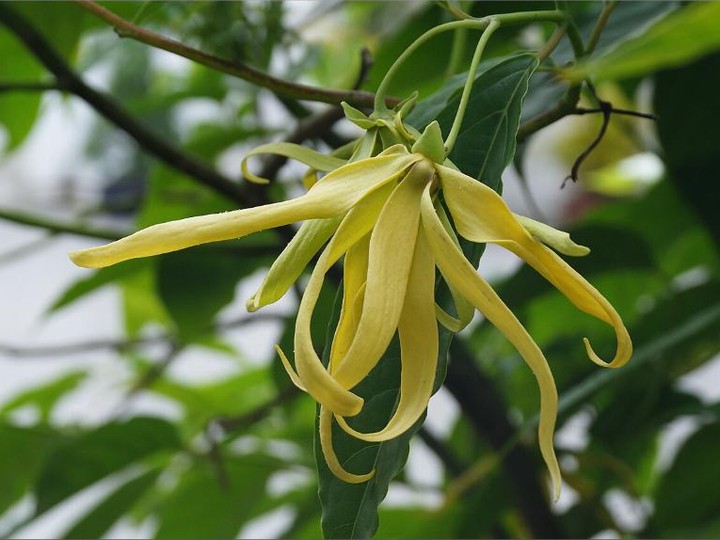
Madagascar ylang-ylang essential oil, complete distillation
Whole-flower 'complete' ylang-ylang oil from Nosy Be, Madagascar's ylang heartland.
| Origin | Nosy Be, Madagascar |
| Indian subcontinent | No |
| Category | Global Fibers, Oils & Botanicals |
| Retail price band | $$$$ (indicative $150–300/kg, season and grade dependent) |
| Bulk / trade price band | 25kg+ drums on contract; complete/totum oil typically priced between Extra and lower fractional grades |
| Sourcing status | Dossier researched from public sources — producer contact not yet established |
| Compliance status | Preliminary review complete (see below) — not yet legally verified |
Detailed study
Ylang-ylang oil is steam-distilled from the fresh flowers of Cananga odorata. Producers traditionally separate the distillate into successive fractions (Extra, First, Second, Third) collected at different points in the distillation run; 'complete' or 'totum' oil is the full, unfractionated run recombined into a single balanced oil rather than split by fraction.
Provenance & producer
Nosy Be, an island off Madagascar's northwest coast, has been the country's ylang-ylang centre since the French colonial era and remains the historic core of Malagasy production; Madagascar today supplies the majority of the world's ylang-ylang essential oil, produced by a mix of smallholder growers and cooperative/estate distilleries.
Market & pricing
Ylang-ylang is a foundational heart note in fine perfumery and is widely used in aromatherapy and spa/wellness products. 'Complete' oil is valued by buyers wanting a full-spectrum, balanced aroma in one product rather than sourcing and blending separate fractions themselves; key buyers are fragrance houses, aromatherapy brands and natural cosmetics formulators.
Compliance & export
No CITES restriction applies. Malagasy essential-oil exports require phytosanitary and customs clearance through national trade authorities; a growing number of Nosy Be cooperatives pursue organic and fair-trade certification for EU and North American buyers, and IFRA/REACH rules govern downstream fragrance use.
Sources
Image status
A working reference photograph is in place, captured from a freely-licensed Wikimedia Commons source. Cananga odorata (ylang-ylang) flower, Prenn, Quality image, CC BY-SA 3.0, via Wikimedia Commons. Note: same photo illustrates both the Madagascar and Comoros listings, as both concern the same species and flower morphology; the specific plant photographed is not documented as being from either island. Treat this as a placeholder for marketing purposes: exact licence terms should be re-verified on the Commons file page, and original producer photography is recommended before final trade use.