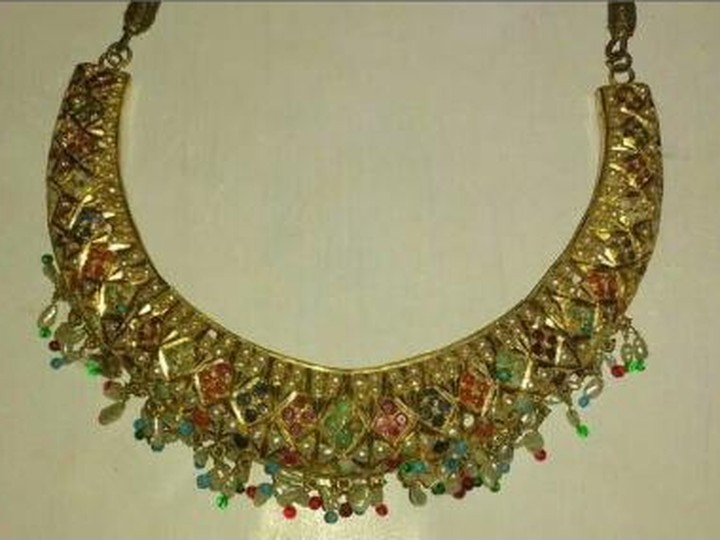
Meenakari enamelled gold jewellery
Persian enamel artistry reborn in Jaipur gold — jewel-toned mina fired onto hand-engraved 22k settings.
| Origin | Meenakari's origins are Persian (Safavid enamel work, called 'mina'), introduced to Rajasthan via Mughal-era craft exchange, popularly credited to artisans brought to Amer/Jaipur under Raja Man Singh I in the 16th century; Jaipur is the leading contemporary hub and this is broadly defensible, but the catalogue should avoid implying Meenakari is an indigenous Jaipur invention — it is an adapted, localised Persian technique, and Meenakari is also historically strong in Varanasi, Delhi, Lucknow and Bengal, so 'Jaipur' should be framed as the primary craft cluster, not an exclusive origin. |
| Indian subcontinent | Yes |
| Category | Gems, Metalwork & Craft |
| Retail price band | luxury |
| Bulk / trade price band | premium |
| Sourcing status | Dossier researched from public sources — producer contact not yet established |
| Compliance status | Preliminary review complete (see below) — not yet legally verified |
Detailed study
Meenakari is a vitreous enamelling technique where powdered coloured glass (mina) is fused onto hand-engraved gold or silver surfaces through repeated high-temperature firing, one colour at a time, starting with the hardest colour (typically white or a base tone) and ending with the most delicate (red); it is frequently combined with kundan stone-setting on the front, with meenakari decorating the concealed reverse.
Provenance & producer
The technique traces to Persian (Safavid) enamel artistry and is traditionally said to have been brought to Amer/Jaipur by artisans invited by Raja Man Singh I in the 16th century, later flourishing under Mughal and Rajput patronage; Jaipur remains the leading contemporary centre, alongside historic pockets in Varanasi, Lucknow, Delhi and Bengal.
Market & pricing
Meenakari gold jewellery spans mid-range fashion pieces (silver-based, budget-mid) to fine 22k gold bridal and heritage sets (premium-luxury), sold through Jaipur's Johari Bazaar ateliers, Indian bridal jewellery retailers, and export wholesale to South Asian diaspora and gift/décor markets for smaller enamelled objects.
Compliance & export
Gold/silver items require BIS hallmarking in the Indian domestic market (purity marking, e.g., 22K916); export listings should not overstate an exclusive 'Jaipur invention' provenance given the technique's Persian origin and multi-region Indian practice, and should disclose base metal, gold-plating vs. solid-gold construction, and enamel composition per destination consumer-protection labelling norms.
Sources
- Cultural India — Meenakari Jewelry: Origin, History, Types & Design
- Government of Rajasthan (Handmade in Rajasthan) — Meenakari
- ThePrint — Meenakari: enamel art that travelled from 16th-century Persia to India
Image status
A working reference photograph is in place, captured from a freely-licensed Wikimedia Commons source. Himachali Gold Necklace with Meenakari, Kangra culture, Himachal Pradesh, SpeakingArch, CC BY-SA 4.0, via Wikimedia Commons. Treat this as a placeholder for marketing purposes: exact licence terms should be re-verified on the Commons file page, and original producer photography is recommended before final trade use.