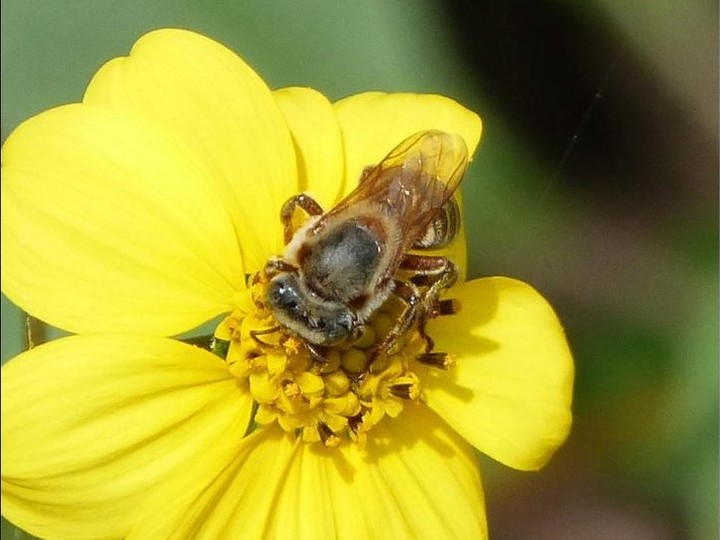
Mexican raw Ya'axche' forest honey (Melipona bee)
Rare raw honey from stingless Melipona bees, kept by Maya beekeepers in Yucatán's forests for over a thousand years.
| Origin | The stingless-bee honey tradition is genuine and well documented — Yucatán is confirmed as Mexico's largest producer of Melipona honey, tied to a pre-Hispanic Maya beekeeping tradition (meliponiculture) going back over a thousand years. However, the traditional Maya name for this honey/bee is typically 'Xunan-kab' ('royal lady', referring to Melipona beecheii) rather than 'Ya'axche'', which is the Maya word for the ceiba (sacred silk-cotton World Tree). 'Ya'axche' forest honey' works as evocative marketing but should not be presented as the established traditional product name — consider pairing it with or replacing it with 'Xunan-kab' for accuracy. |
| Indian subcontinent | No |
| Category | Global Rare Foods & Ingredients |
| Retail price band | $$$$ (indicative $40–$90 per 250ml jar retail, reflecting low-yield stingless-bee production) |
| Bulk / trade price band | Bulk raw honey: indicative $25–$50/kg from cooperative meliponario producers, well above conventional honey pricing due to scarcity |
| Sourcing status | Dossier researched from public sources — producer contact not yet established |
| Compliance status | Preliminary review complete (see below) — not yet legally verified |
Detailed study
Melipona is a genus of stingless bees (Meliponini) native to the Neotropics; unlike Apis mellifera honey, Melipona honey is thinner, more acidic/fermented in character, and produced in far smaller volumes per hive per year, historically used by the Maya both as food and in ritual/medicinal contexts.
Provenance & producer
Yucatán is the largest Mexican producer of Melipona honey, sustained by Maya meliponicultores who keep colonies (notably Melipona beecheii) in traditional hollow-log hives (jobones) within milpa forest gardens; production and cultural-knowledge-transmission efforts are supported by regional conservation initiatives.
Market & pricing
Melipona honey remains a minor-volume but high-value niche globally, sold to specialty gourmet, traditional-medicine and eco-tourism/cultural-heritage buyers; Mexican Melipona beekeeping has also drawn conservation and development funding due to the bees' role as native pollinators and Maya cultural heritage, though commercial volumes are far smaller than conventional honey.
Compliance & export
Melipona beecheii is not CITES-listed, but some regional/state conservation programs in Mexico support stingless-bee habitat protection given pollinator-decline concerns; honey export requires standard SENASICA (Mexican agri-food safety service) food-safety certification, and any 'raw'/unpasteurized labeling must meet destination-country raw-honey import rules (stricter in the EU/US for unprocessed honey).
Sources
Image status
A working reference photograph is in place, captured from a freely-licensed Wikimedia Commons source (File:Melipona beecheii MHNT.jpg). Melipona beecheii on flower, Playa Giron Zapata Cuba, gailhampshire, CC BY 2.0, via Wikimedia Commons Treat this as a placeholder for marketing purposes: exact licence terms should be re-verified on the Commons file page, and original producer photography is recommended before final trade use.