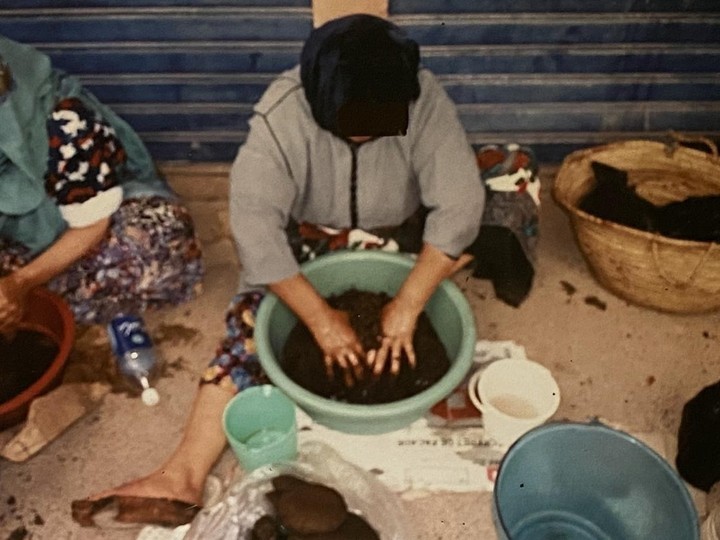
Moroccan argan oil, women's cooperative cold-pressed
Cracked and hand-pressed entirely by women's cooperatives from the nuts of Argania spinosa — a tree endemic to a single UNESCO biosphere reserve in southwestern Morocco — argan oil is a rare product where fair-trade sourcing is structurally built into the supply chain.
| Origin | Souss-Massa, Morocco |
| Indian subcontinent | No |
| Category | Rare Spices, Botanicals & Teas |
| Retail price band | Retail roughly MAD 200-600 per litre (souk to pharmacy range) for cosmetic grade; MAD 250-500+ per litre for culinary/edible grade (citytoursmorocco.com buying guide) |
| Bulk / trade price band | Pricing under research |
| Sourcing status | Dossier researched from public sources — producer contact not yet established |
| Compliance status | Preliminary review complete (see below) — not yet legally verified |
Detailed study
Argan oil is cold-pressed from the kernels of Argania spinosa, a slow-growing tree endemic to southwestern Morocco (with a small enclave in western Algeria); two distinct commercial grades exist — a lighter, unroasted cosmetic-grade oil, and a roasted, nutty culinary grade used in Moroccan cuisine (notably amlou paste). Traditional extraction is famously labour-intensive: cracking the extremely hard nuts by hand between stones, a process almost entirely performed by women, which underlies the industry's distinctive cooperative structure.
Provenance & producer
Argan trees grow only within the Arganeraie Biosphere Reserve, a UNESCO Man and the Biosphere reserve centred on the Souss-Massa region around Agadir/Essaouira/Taroudant, an ecosystem so ecologically significant that argan cultivation and harvesting practices are inscribed on UNESCO's Representative List of Intangible Cultural Heritage. Since the 1990s, dozens of women's cooperatives (e.g. Amal, Ajddigue) have organized production specifically to let women producers capture a larger share of value — cooperative sales reportedly return 60-70% of proceeds to women producers versus under 10% through traditional middleman channels.
Market & pricing
Retail pricing varies widely by grade and sales channel, from roughly MAD 200 (cooperative, cosmetic grade) to MAD 600+ per litre (pharmacy/premium retail), reflecting both genuine quality variation and a well-documented problem of diluted/counterfeit 'argan oil' in tourist markets, which buyers are advised to guard against via cooperative or certified sourcing.
Compliance & export
Argan oil has an Indication Géographique Protégée (IGP) status recognized in Morocco (held by specific certified cooperatives such as Ajddigue), and the underlying Arganeraie ecosystem carries UNESCO biosphere-reserve protections governing sustainable harvest. For EU/US import, cosmetic-grade oil must meet EU Cosmetics Regulation (EC) 1223/2009 safety-documentation requirements, while culinary-grade oil for food use requires FDA food-facility registration/import compliance and EU food-safety/traceability rules; ECOCERT and FLO-CERT fair-trade certifications are commonly used by cooperatives to substantiate both organic and ethical-sourcing claims for export buyers.
Sources
- UNESCO – Arganeraie, Man and the Biosphere Programme
- UNESCO Intangible Cultural Heritage – Argan, practices and know-how
- City Guide Morocco – Argan Oil Morocco: Cooperatives, Buying Guide, Prices
Image status
A working reference photograph is in place, captured from a freely-licensed Wikimedia Commons source (File:Argan paste making in Morocco.jpg). Women making argan oil, Souss region Morocco, Abdellah Moukal, CC BY-SA 4.0, via Wikimedia Commons Treat this as a placeholder for marketing purposes: exact licence terms should be re-verified on the Commons file page, and original producer photography is recommended before final trade use.