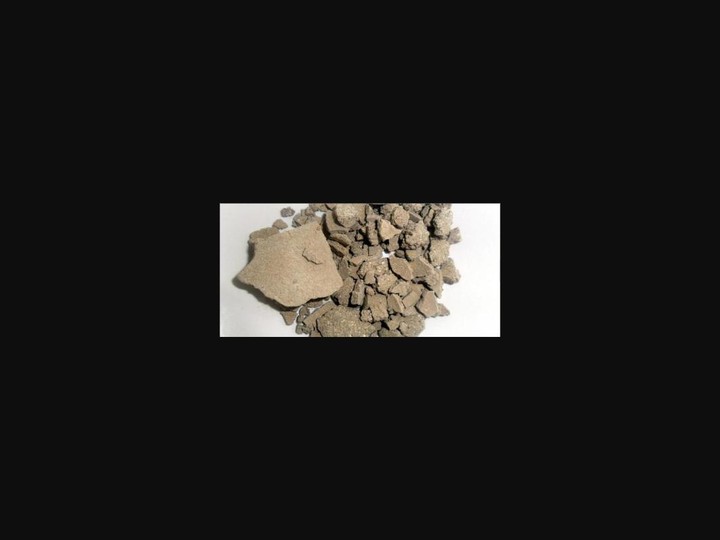
Moroccan Ghassoul clay, mineral-rich
Ancient volcanic-mineral clay mined from a single deposit deep in the Moroccan Atlas.
| Origin | Atlas Mountains, Morocco |
| Indian subcontinent | No |
| Category | Global Wellness & Functional Ingredients |
| Retail price band | $$ (indicative $8–$20/kg for cosmetic-grade powdered ghassoul) |
| Bulk / trade price band | $4–$9/kg on bulk export orders (25kg+ sacks), grade and particle-fineness dependent |
| Sourcing status | Dossier researched from public sources — producer contact not yet established |
| Compliance status | Preliminary review complete (see below) — not yet legally verified |
Detailed study
Ghassoul (also spelled rhassoul or ghassul) is a mineral-rich stevensite clay historically mined from a single known geological deposit in Morocco's Atlas Mountains, traditionally used for centuries as a hair and skin cleanser due to its high magnesium, silica and mineral-oxide content and natural cleansing/absorbent properties, without the synthetic surfactants of modern soap.
Provenance & producer
The primary ghassoul deposit lies in the Atlas Mountain region near Fes/Meknes, mined through both traditional small-scale and modern semi-mechanized methods; because it derives from a single geologically distinct deposit rather than a widely distributed clay type, genuine ghassoul is a geographically constrained raw material, unlike more generically available bentonite or kaolin clays.
Market & pricing
Ghassoul is a well-established ingredient in natural and Moroccan-heritage cosmetics (hammam rituals, shampoo bars, face masks) with strong export demand to EU and North American natural-beauty brands; its single-source geological origin gives genuine 'terroir' marketing value distinct from more commodity clay ingredients.
Compliance & export
No CITES issue applies (mineral, not biological, material). Morocco regulates mining and export of ghassoul through national mining and commerce authorities; cosmetic-ingredient use in the EU and US requires compliance with each market's cosmetic-ingredient safety and labelling rules (INCI listing as the clay's mineralogical designation), and buyers should request heavy-metal contaminant testing given its use as a leave-on/rinse-off skin and hair product.
Sources
Image status
A working reference photograph is in place, captured from a freely-licensed Wikimedia Commons source. Rhassoul (Ghassoul) clay, a cosmetic mineral clay mined from the Atlas Mountains of Morocco, CC BY-SA 4.0, via Wikimedia Commons Treat this as a placeholder for marketing purposes: exact licence terms should be re-verified on the Commons file page, and original producer photography is recommended before final trade use.