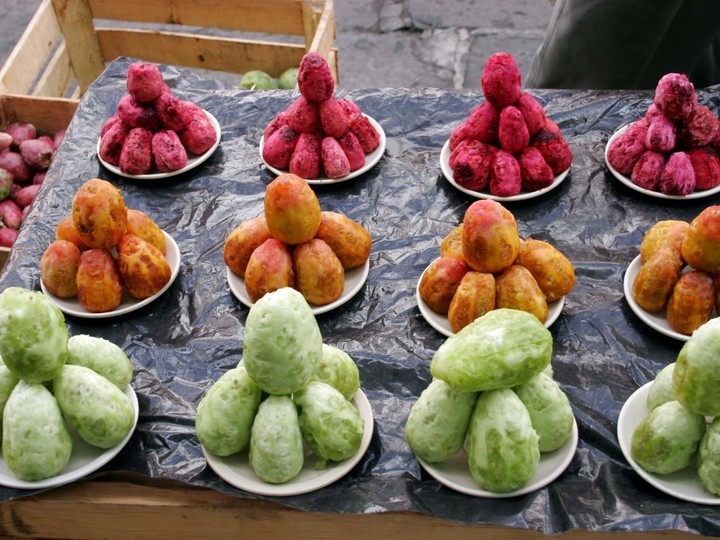
Moroccan Prickly Pear seed oil, cold-pressed
Liquid gold from Morocco's Ait Baamrane cactus fields — cold-pressed by women's cooperatives, drop by precious drop.
| Origin | Ait Baamrane, Morocco |
| Indian subcontinent | No |
| Category | Ayurveda & Wellness Extracts |
| Retail price band | luxury |
| Bulk / trade price band | luxury, extremely limited yield-constrained wholesale |
| Sourcing status | Dossier researched from public sources — producer contact not yet established |
| Compliance status | Preliminary review complete (see below) — not yet legally verified |
Detailed study
Prickly pear seed oil is cold-pressed from the tiny seeds of Opuntia ficus-indica fruit, requiring an extraordinarily labor-intensive extraction (commonly cited at roughly one ton of fruit yielding about one liter of oil), which explains its status as one of the world's most expensive cosmetic oils. The oil is prized in skincare for exceptionally high vitamin E and sterol content plus a fatty-acid profile rich in linoleic acid, valued for anti-aging and skin-barrier-repair formulations.
Provenance & producer
Southwestern Morocco's Ait Baamrane region (Guelmim-Oued Noun area near the Anti-Atlas) is a well-documented center of prickly pear cultivation on semi-arid land, where the crop has become an important cash resource for rural Berber (Amazigh) communities, with production frequently organized through women's cooperatives that hand-process the fruit and seeds. This model mirrors and complements Morocco's better-known argan oil cooperative sector, extending a similar women-led rural economic development approach to prickly pear.
Market & pricing
Prickly pear seed oil occupies the luxury tier of the natural cosmetic-oil market, priced dramatically above argan and most other plant oils due to yield scarcity, and is marketed almost exclusively to premium skincare/cosmetic formulators and high-end natural beauty retailers rather than mass-market or ingestible nutraceutical channels. Buyers are typically luxury cosmetics brands, private-label skincare manufacturers and direct-to-consumer premium beauty retailers seeking an ethically-sourced, women's-cooperative story alongside the product.
Compliance & export
No CITES or IUCN-threatened status applies to Opuntia ficus-indica, which is a widely cultivated, non-threatened cactus species globally. In Morocco, cooperative-produced cosmetic oils for export typically require standard agricultural-export and cosmetic-product documentation; in the US such oil is regulated as a cosmetic ingredient under FDA cosmetic rules (no pre-market approval required but must be safely labeled, not therapeutic-claimed), and in the EU it falls under EU Cosmetic Products Regulation requiring a Cosmetic Product Safety Report and correct INCI labeling (Opuntia Ficus-Indica Seed Oil).
Sources
- Obakki: The Power Behind Our Moroccan Prickly Pear Oil
- Organic Spa Magazine: A Global Mission from Morocco: Oils with Purpose
- Moroccan Elixir: Prickly Pear Seed Oil & Its Uses
Image status
A working reference photograph is in place, captured from a freely-licensed Wikimedia Commons source (File:31-05-2017 Honey bees in the flower of a Prickly pear (Opuntia ficus-indica) (1).JPG). Prickly pears, Tomas Castelazo, CC BY-SA 2.5, via Wikimedia Commons Treat this as a placeholder for marketing purposes: exact licence terms should be re-verified on the Commons file page, and original producer photography is recommended before final trade use.