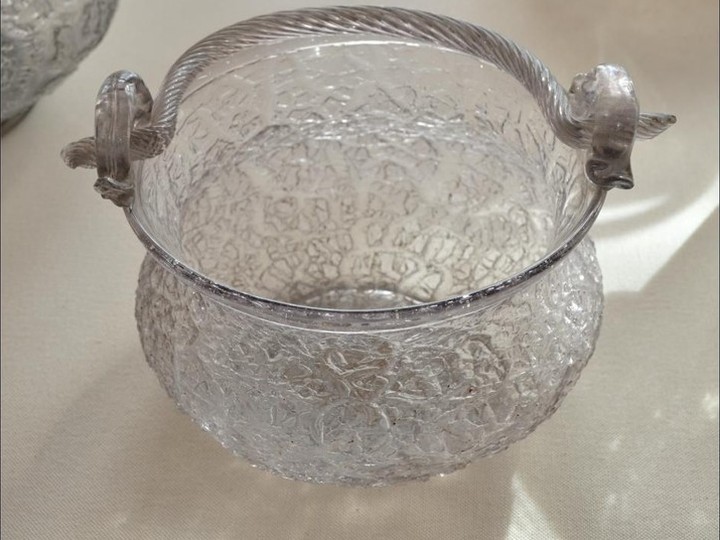
Murano hand-blown glass art object
Molten fire and Venetian secrecy, blown into a thousand years of glass mastery.
| Origin | Murano, Venice, Italy |
| Indian subcontinent | No |
| Category | Gems, Metalwork & Craft |
| Retail price band | premium |
| Bulk / trade price band | trade pricing available for gallery/hospitality bulk orders from certified fornaci |
| Sourcing status | Dossier researched from public sources — producer contact not yet established |
| Compliance status | Preliminary review complete (see below) — not yet legally verified |
Detailed study
Murano glass is produced by master glassblowers (maestri vetrai) using techniques passed down through guild lineages since the industry was relocated to the island of Murano in 1291 (to contain furnace fire risk to Venice). Signature techniques include millefiori, filigrana, sommerso, and aventurine, each requiring furnace temperatures near 1,000°C and rapid hand-shaping before the glass cools.
Provenance & producer
Murano, an island in the Venetian Lagoon, Italy, remains the recognised global centre for this craft, with authentic pieces increasingly carrying the 'Vetro Artistico Murano' trademark — a legal certification mark introduced in the 1990s to combat cheap Asian and mainland-Italian imitations sold as 'Murano-style' glass.
Market & pricing
Genuine certified Murano glass sits in the premium bracket, with small art-glass pieces starting around €80-150 and museum-quality or large sculptural works reaching thousands of euros; the market is heavily targeted by counterfeit and uncertified 'Murano-style' goods, so provenance documentation materially affects price and buyer trust. Target buyers include interior designers, luxury gift retailers, and collectors.
Compliance & export
To be marketed honestly as 'Murano glass' rather than 'Murano-style', the item should carry the Vetro Artistico Murano consortium trademark or an invoice/certificate of authenticity from a registered Murano fornace; EU consumer-protection and Italian trademark law restrict use of 'Murano' as a geographic-origin marketing claim on non-Murano-made glass.
Sources
- Wikipedia: Murano glass / Murano Glass Museum
- Glass of Venice: History of Murano Glass
- Italy Segreta: Can Murano Glass Survive the 21st Century?
Image status
A working reference photograph is in place, captured from a freely-licensed Wikimedia Commons source (File:Murano Glass Museum vetro ghiaccio 27022015 06.jpg). Freely licensed per Wikimedia Commons hosting policy — confirm exact CC licence on file page. Treat this as a placeholder for marketing purposes: exact licence terms should be re-verified on the Commons file page, and original producer photography is recommended before final trade use.