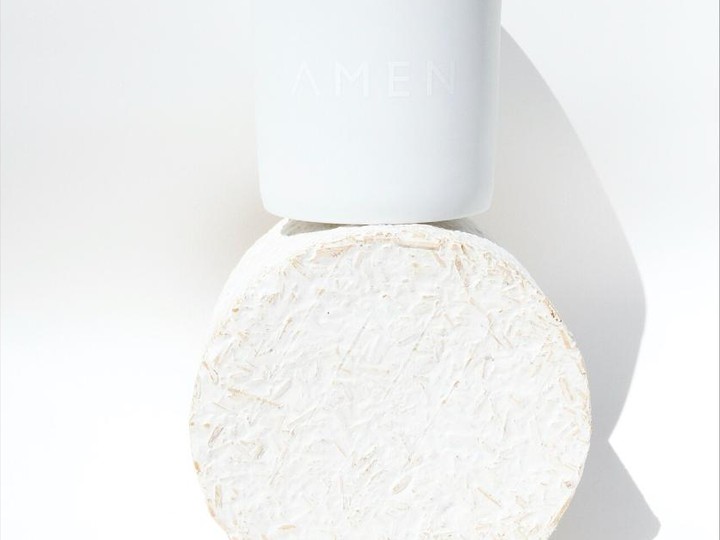
Mycelium composite packaging blocks
Compostable mycelium-composite packaging blocks — grown from agricultural residue bound by fungal mycelium into a home-compostable polystyrene alternative, in the mould of India's Chennai-based Roha Biotech and global players like Ecovative.
| Origin | Chennai, India (IIT Madras biotech cluster) — likely misstated as Pune. The clearest, best-documented Indian mycelium-packaging producer identified is Roha Biotech, incubated at IIT Madras and based in Chennai, Tamil Nadu — not Pune. No comparably documented Pune-based mycelium packaging manufacturer was found. |
| Indian subcontinent | Yes |
| Category | Fungi & Functional Mycology |
| Retail price band | No published per-block/per-kg consumer price for Indian mycelium packaging was found; globally the category positions itself as a cost-competitive-at-scale alternative to expanded polystyrene (EPS) foam. |
| Bulk / trade price band | Roha Biotech has scaled from roughly 4 tonnes/month toward a stated target of 4 tonnes/day of mycelium packaging output (BioPatrika), indicating commercial-scale bulk supply is emerging in India, but no per-tonne wholesale price was found. |
| Sourcing status | Dossier researched from public sources — producer contact not yet established |
| Compliance status | Preliminary review complete (see below) — not yet legally verified |
Detailed study
Mycelium packaging is produced by growing fungal mycelium through agricultural residue in a mould, then heat-treating it to halt growth, yielding a rigid, lightweight, home-compostable material used as a polystyrene-foam substitute — commercialised globally by Ecovative and, in India, by ventures such as Roha Biotech.
Provenance & producer
The best-documented Indian producer found is Roha Biotech, an IIT Madras-incubated startup based in Chennai using agricultural residue plus mycelium to make compostable packaging for electronics and premium personal-care brands, scaling production toward several tonnes per day. No verified Pune-based equivalent was identified.
Market & pricing
No specific retail or wholesale per-unit price was found; Roha Biotech's reported production scale-up (4 tonnes/month toward a 4 tonnes/day target) is the clearest available signal of commercial traction, alongside a reported $1M raise target for expansion.
Compliance & export
As a cultivated biomaterial, no wildlife/CITES regulation applies. Relevant frameworks are packaging/environmental ones: compostability standards (IS/ISO 17088 or EN 13432-equivalent), and destination-market packaging-waste regulations if exported; biodegradability claims should be substantiated with test certification.
Sources
- BioPatrika – Roha Biotech: Revolutionizing Sustainable Packaging with Mushrooms
- bioplasticsnews.com – Indian Mycelium Packaging Startup in the news
Image status
A working reference photograph is in place, captured from a freely-licensed Wikimedia Commons source. Candle and its mycelium packaging, a mycelium composite packaging block shown supporting a glass candle jar, Lilylily1407, CC BY-SA 4.0, via Wikimedia Commons. Treat this as a placeholder for marketing purposes: exact licence terms should be re-verified on the Commons file page, and original producer photography is recommended before final trade use.