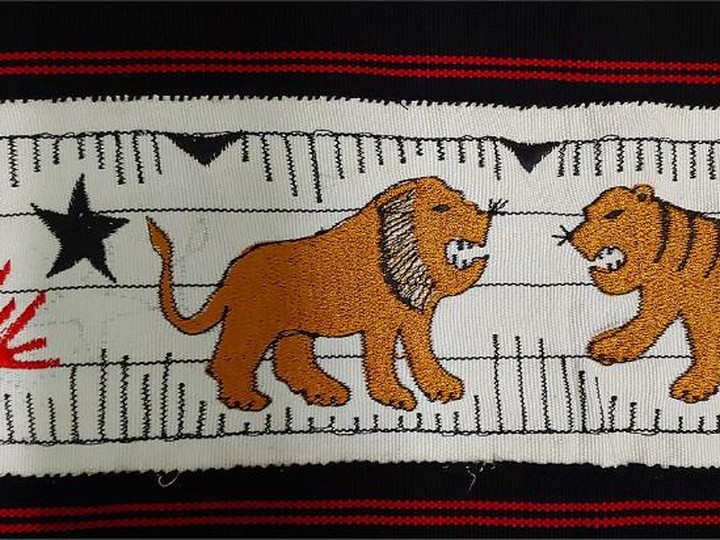
Naga handwoven tribal shawl
Status-marked shawls from Nagaland's loin-loom weavers, one motif per lineage.
| Origin | Nagaland, India |
| Indian subcontinent | Yes |
| Category | Heritage Textiles & Weaves |
| Retail price band | mid |
| Bulk / trade price band | budget |
| Sourcing status | Dossier researched from public sources — producer contact not yet established |
| Compliance status | Preliminary review complete (see below) — not yet legally verified |
Detailed study
Naga shawls are woven by women on backstrap (loin) looms in narrow panels — typically three strips woven separately and then hand-stitched together — using wool and cotton yarns, often finished with beadwork or cowrie-shell trim. Motifs are not decorative alone: stripes, bands, animal and warrior imagery encode the wearer's clan, gender, age-group and social or warrior status, with tribes such as the Ao (Tsüngkotepsü, Rongsü shawls) and Angami (Lohe shawls) each holding distinct, recognisable patterns.
Provenance & producer
The craft belongs to the many Naga tribes of Nagaland, and closely related weaving traditions extend into neighbouring Manipur, Assam, Arunachal Pradesh and across the border into Myanmar's Naga areas. Weaving remains a home-based, largely women-led practice passed down within family and village lines; industry bodies including the Indian Chamber of Commerce have pursued Geographical Indication recognition for named Naga shawl types, though GI status should be verified per specific shawl name rather than assumed for the category as a whole.
Market & pricing
Naga shawls sell into a mid-market niche for ethnographic-textile collectors, Northeast-India-focused retailers, and buyers interested in tribal/heritage design; because designs carry clan-specific meaning, ethical retail positioning should credit the specific tribe and shawl name rather than using a generic 'tribal shawl' label alone.
Compliance & export
Wool-cotton blend shawls require standard fibre-content labelling in export markets (EU Regulation 1007/2011, US Textile Fiber Products Identification Act) declaring the wool/cotton percentage. Where GI protection has been granted to specific named shawl types (e.g., particular Ao or Angami patterns), those names should not be applied to unrelated designs; general customs documentation (HS code, country-of-origin as India) otherwise applies as with other Indian handloom exports.
Sources
Image status
A working reference photograph is in place, captured from a freely-licensed Wikimedia Commons source. Naga shawl used in the Indian state of Nagaland, hand-woven tribal shawl with tiger, lion and sun motifs, Atoelsius, CC BY-SA 4.0, via Wikimedia Commons. Treat this as a placeholder for marketing purposes: exact licence terms should be re-verified on the Commons file page, and original producer photography is recommended before final trade use.