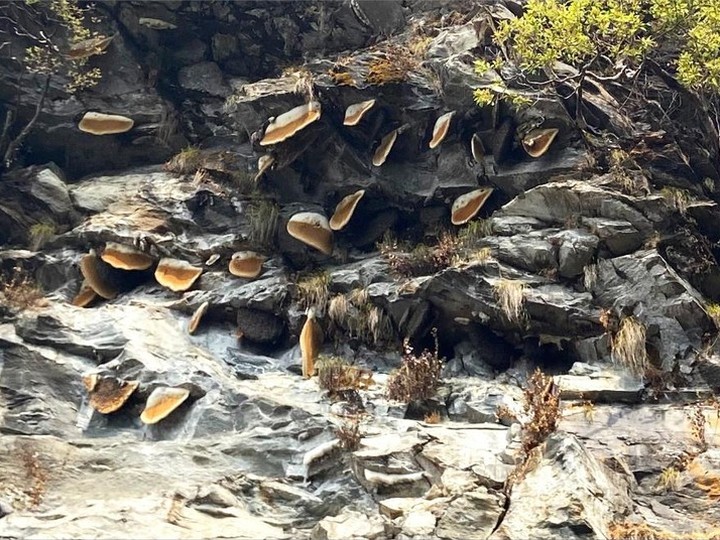
Nepalese Himalayan cliff honey (mad honey, Apis laboriosa)
Harvested by rope-suspended hunters from wild Apis laboriosa combs on sheer Himalayan cliff faces in Lamjung, this rhododendron-nectar honey is prized — and consumed with real caution — for its grayanotoxin-driven psychoactive potency.
| Origin | Lamjung, Nepal |
| Indian subcontinent | Yes |
| Category | Rare Spices, Botanicals & Teas |
| Retail price band | Retail roughly USD 40-100+ per 500g-1kg jar depending on grade and vendor (exportfromnepal.com, strongmadhoney.com pricing) |
| Bulk / trade price band | Pricing under research |
| Sourcing status | Dossier researched from public sources — producer contact not yet established |
| Compliance status | Preliminary review complete (see below) — not yet legally verified |
Detailed study
'Mad honey' or 'red honey' is produced by the giant Himalayan honey bee, Apis laboriosa, the world's largest honeybee, which builds exposed single-comb nests on sheer cliff faces at altitudes of 2,500-3,000m+. When bees forage heavily on Rhododendron species common in the Himalayas, the honey accumulates grayanotoxins — naturally occurring neurotoxic diterpenes from the nectar — giving it a distinctive bitter, smoky flavour and mild hallucinogenic/intoxicating effects at even modest doses. Potency (and price) is strongly seasonal, spring harvests during peak rhododendron bloom yielding the most potent honey.
Provenance & producer
Harvesting is done via a centuries-old traditional practice among Gurung and other hill communities, chiefly in Lamjung and neighbouring Kaski, Gorkha, Myagdi and Rasuwa districts of central-western Nepal, where hunters descend on handmade bamboo/rope ladders to smoke and cut combs from vertical cliffs — a well-documented, declining craft, with wild bee populations reportedly under pressure from habitat change and over-harvesting.
Market & pricing
Mad honey commands a significant premium over ordinary honey due to hunting risk, seasonality and novelty demand in Western wellness/'micro-dosing' markets; retail listings for genuine Nepal-sourced mad honey run roughly USD 40-100+ per 500g-1kg depending on grade and vendor claims of grayanotoxin content, though such claims are largely unregulated and self-reported.
Compliance & export
This is a flagged sensitive product: grayanotoxin is a genuine neurotoxin causing dose-dependent 'honey intoxication' — nausea, vomiting, hypotension, bradycardia, and in rare high-dose cases cardiac arrhythmia or seizures — documented in clinical toxicology literature on Turkish and Nepali mad honey poisoning cases. It is not a scheduled/controlled substance in the US, EU or UK, so it is technically legal to import and sell as a food product, but it falls under ordinary food-safety/import law rather than any drug-specific framework — meaning there is no standardized potency labelling or dosage-safety regulation, which is itself a real compliance and liability gap for any commercial seller and should be disclosed prominently with dosage warnings, health disclaimers, and exclusion for pregnant users, children and cardiac patients.
Sources
- Honey Hunting Nepal – Mad Honey in Nepal: Hunting, Effects, Locations
- Dialogue Earth – Nepal's honey hunters cling to traditions as bee numbers fall
- IMHSI – What Is Mad Honey? Science, Safety & Origins
Image status
A working reference photograph is in place, captured from a freely-licensed Wikimedia Commons source (File:Apis laboriosa in Sikkim (cropped).jpg). Genuine Apis laboriosa (giant Himalayan honey bee) photo, though taken in Sikkim, India rather than Nepal — same species, adjacent Himalayan range, so it correctly depicts the source bee even if not the exact Lamjung locale. No confirmed Commons image was found of an actual Nepal cliff-honey-hunting scene; verify licence on file page. Treat this as a placeholder for marketing purposes: exact licence terms should be re-verified on the Commons file page, and original producer photography is recommended before final trade use.