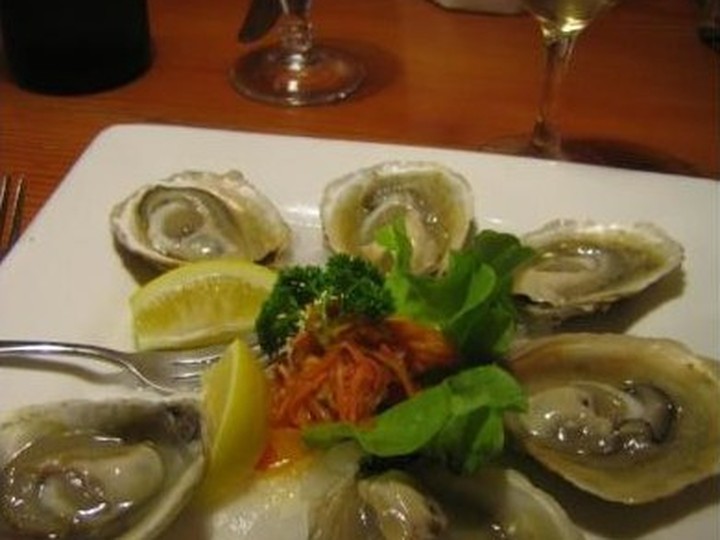
New Zealand Bluff oysters, wild-dredged
Foveaux Strait's icy waters, dredged the traditional way since the 1860s
| Origin | Bluff, New Zealand |
| Indian subcontinent | No |
| Category | Global Rare Foods & Ingredients |
| Retail price band | $$$ — premium seasonal seafood; indicative $2.50–$4.50 per oyster landed price (season-dependent) |
| Bulk / trade price band | Wholesale sacks (approx. 100 dozen) priced per season allocation; contact for current-season quota-linked pricing |
| Sourcing status | Dossier researched from public sources — producer contact not yet established |
| Compliance status | Preliminary review complete (see below) — not yet legally verified |
Detailed study
Bluff oysters (Tiostrea chilensis / Ostrea chilensis, the New Zealand dredge or flat oyster) are a wild, dredge-harvested bivalve fished — not farmed — from the cold, nutrient-rich waters of Foveaux Strait between the South Island and Stewart Island. They are prized for a dense, briny, mineral flavour distinct from farmed Pacific oysters.
Provenance & producer
The fishery is centred on the town of Bluff, Southland, with a short traditional season (historically March–August) run by licensed dredge vessels operating under a quota management system; the fishery has repeatedly been affected by the parasite Bonamia exitiosa, which caused mass mortalities in past decades and has led to periodic harvest reductions.
Market & pricing
Bluff oysters are a celebrated New Zealand delicacy with strong domestic demand (the annual Bluff Oyster & Food Festival) and export appeal to Australia and premium Asian and North American seafood-import channels; supply is inherently limited by quota and biological cycles, supporting a scarcity-driven premium price.
Compliance & export
Ngāi Tahu (the local iwi with fisheries interests) and industry stakeholders have periodically paused or reduced Bluff oyster harvest to allow stock recovery — buyers should confirm current-season quota status and legal harvest windows before committing to supply contracts. Exports are subject to New Zealand MPI (Ministry for Primary Industries) shellfish biotoxin monitoring and food-safety certification for shellfish destined for international markets.
Sources
- Iwi extends pause on Bluff oyster harvest to prioritise fishery's recovery — NZ Herald
- Dredge oysters — Te Ara Encyclopedia of New Zealand
- Industry divided over health of Bluff oyster stocks — Newsroom
Image status
A working reference photograph is in place, captured from a freely-licensed Wikimedia Commons source. New Zealand bluff oysters served on a plate, mari, CC BY 2.0, via Wikimedia Commons Treat this as a placeholder for marketing purposes: exact licence terms should be re-verified on the Commons file page, and original producer photography is recommended before final trade use.