New Zealand colostrum powder, grass-fed
Freeze-dried bovine colostrum from grass-fed Waikato dairy herds.
| Origin | Waikato, New Zealand |
| Indian subcontinent | No |
| Category | Global Wellness & Functional Ingredients |
| Retail price band | $$$ (indicative $60–$120/kg bulk powder, immunoglobulin-content dependent) |
| Bulk / trade price band | $40–$90/kg on larger contract volumes; premium pricing tied to verified IgG (immunoglobulin G) potency grade |
| Sourcing status | Dossier researched from public sources — producer contact not yet established |
| Compliance status | Preliminary review complete (see below) — not yet legally verified |
Detailed study
Colostrum is the nutrient- and antibody-dense first milk produced by mammals (here, dairy cows) in the 24–48 hours after calving, rich in immunoglobulins, growth factors and nutrients; bovine colostrum intended for human supplement use is collected from the surplus beyond what newborn calves require, then pasteurized and freeze- or spray-dried into powder.
Provenance & producer
Waikato is New Zealand's largest dairy-farming region, home to extensive pasture-based, predominantly grass-fed dairy operations; New Zealand's grass-fed, low-intensity dairy system (versus grain-fed confinement dairying common elsewhere) is a genuine and marketable point of differentiation for colostrum and other dairy-derived ingredients.
Market & pricing
Global demand for bovine colostrum supplements is driven by immune-support, sports-nutrition and gut-health positioning across North America, Europe and Asia; New Zealand and Australia are established leading colostrum-ingredient exporters, competing on grass-fed provenance, dairy-industry traceability and immunoglobulin-potency standardization.
Compliance & export
No CITES issue applies. New Zealand dairy exports are regulated by the Ministry for Primary Industries (MPI) for food-safety and animal-health certification; colostrum-specific regulations govern the minimum post-calving collection window (to ensure adequate colostrum is left for calves) and IgG potency labelling standards, and destination markets (EU, US, China) impose their own dairy-import and novel-food/supplement registration requirements.
Sources
Image status
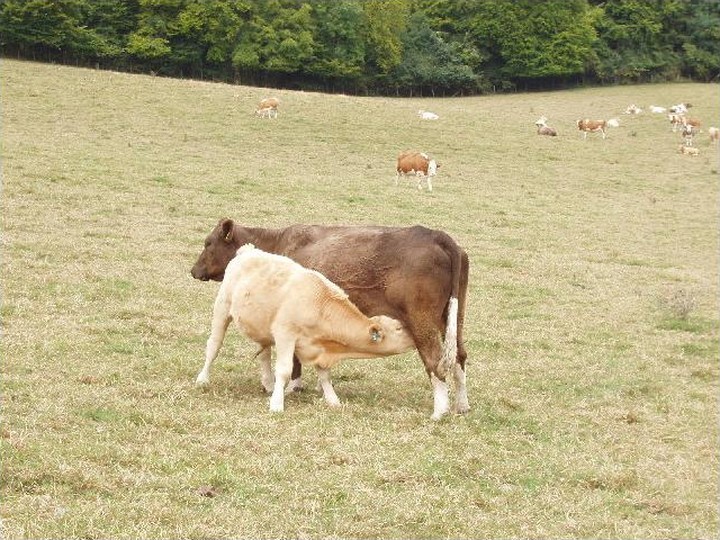
A working reference photograph is in place, captured from a freely-licensed Wikimedia Commons source. Dairy cow with calf suckling on open pasture, near Bledlow, David Hawgood, CC BY-SA 2.0, via Wikimedia Commons. Note: photographed in the UK, not New Zealand; illustrative of grass-fed dairy cow and calf generally. Treat this as a placeholder for marketing purposes: exact licence terms should be re-verified on the Commons file page, and original producer photography is recommended before final trade use.