Okinawan Ashitaba functional-food extract
Tomorrow's Leaf from Japan's Izu Islands — the chalcone-rich regenerative green of Hachijōjima.
| Origin | Ashitaba (Angelica keiskei) is genuinely centered on Hachijō and the wider Izu Islands chain, which are administratively part of Tokyo Metropolis, not Okinawa Prefecture — the catalogue's 'Okinawa' label is a geographic error. Correct origin framing should read 'Hachijō Island, Izu Islands, Tokyo, Japan' rather than Okinawa. |
| Indian subcontinent | No |
| Category | Ayurveda & Wellness Extracts |
| Retail price band | premium |
| Bulk / trade price band | premium wholesale, limited island-grown supply |
| Sourcing status | Dossier researched from public sources — producer contact not yet established |
| Compliance status | Preliminary review complete (see below) — not yet legally verified |
Detailed study
Ashitaba (Angelica keiskei) is a robust coastal umbellifer whose stems exude a distinctive yellow sap containing chalcones (notably xanthoangelol and 4-hydroxyderricin), compounds studied for anti-inflammatory, metabolic and muscle-health effects, alongside high vitamin, mineral and chlorophyll content that earns it 'functional vegetable' status in Japan. Its name, meaning 'tomorrow's leaf,' reflects the plant's unusually fast regrowth after cutting, a trait tied to its resilience and continuous-harvest cultivation model.
Provenance & producer
Ashitaba is native to and most strongly associated with the Izu Islands off Tokyo — particularly Hachijō-jima — and the Bōsō and Miura peninsulas, not Okinawa; it is grown both semi-wild on volcanic island slopes and via dedicated organic farms on Hachijō-jima that supply Japan's functional-food and supplement industry. Production today is predominantly organized cultivation by island farming cooperatives rather than opportunistic wild foraging, given sustained commercial demand.
Market & pricing
Ashitaba occupies a premium niche in Japan's well-established functional-food (kinosei shokuhin) market and has expanded into Western nutraceutical and matcha-adjacent green-superfood retail as a differentiated, island-provenance ingredient; it commands premium pricing due to limited island growing area and Japan-based processing costs versus mainland Asian botanicals. Target buyers include premium wellness brands, Japanese-functional-food importers and green-superfood powder/tea formulators.
Compliance & export
No CITES or IUCN-threatened status applies to Angelica keiskei. In Japan it is regulated as a food/functional food ingredient (with some products qualifying for Japan's Foods with Function Claims system given sufficient clinical substantiation); for export as a dietary supplement to the US it falls under FDA DSHEA rules, and in the EU under novel-food and food-supplement regulation, with correct botanical-origin labeling (Izu Islands/Tokyo, not Okinawa) required to avoid geographic misrepresentation.
Sources
- Wikipedia: Ashitaba
- A chalcone from Ashitaba stimulates myoblast differentiation (PMC)
- Ace Ashitaba: Facts & Figures
Image status
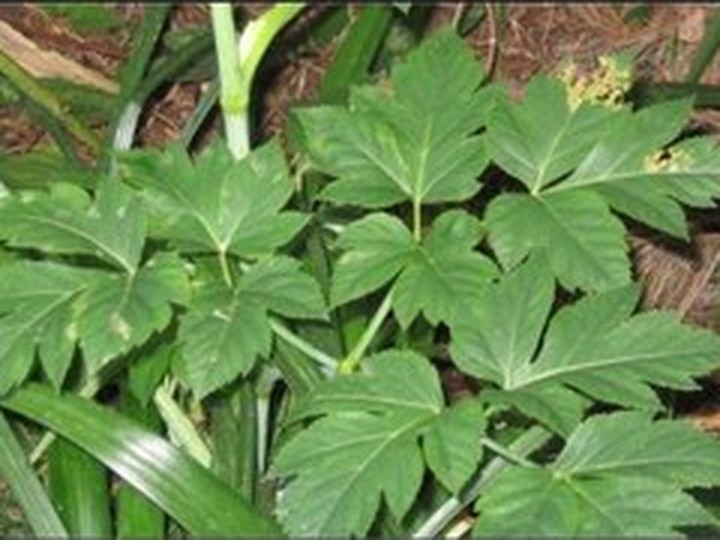
A working reference photograph is in place, captured from a freely-licensed Wikimedia Commons source (File:Angelica keiskei leaves.jpg). Depicts Angelica keiskei (Ashitaba) leaves — verify licence on the Commons page before use. Treat this as a placeholder for marketing purposes: exact licence terms should be re-verified on the Commons file page, and original producer photography is recommended before final trade use.