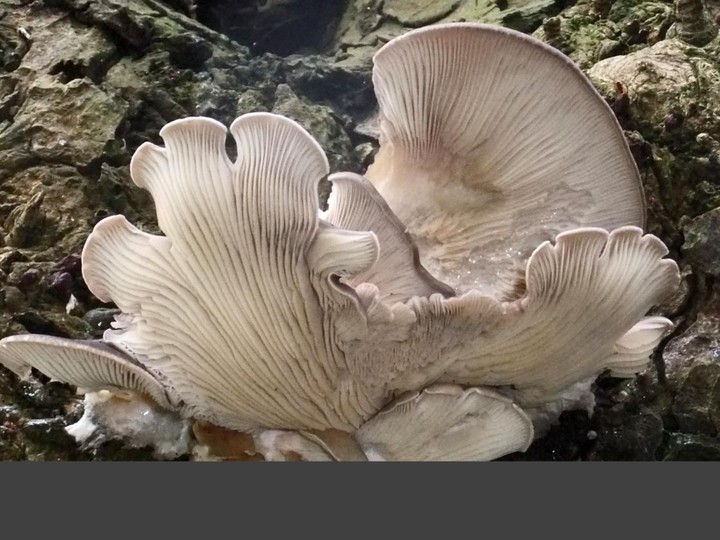
Oyster mushroom grown on cotton-mill waste (upcycled substrate)
Oyster mushrooms fruited on Gujarat's cotton-ginning by-products, turning a textile-belt agricultural residue into a food crop — a substrate pairing with published research backing, though sourced here as a general regional practice rather than a single named farm.
| Origin | Gujarat, India — the general practice (oyster mushroom on cotton-industry waste) is scientifically supported, but no verified Gujarat-specific commercial operation using cotton MILL waste (as opposed to raw cottonseed hull/cotton waste from ginning) was found; soften to "cotton-industry waste" and avoid naming a specific mill or district |
| Indian subcontinent | Yes |
| Category | Fungi & Functional Mycology |
| Retail price band | Retail fresh oyster mushroom: roughly ₹100–160/kg (IndiaMART, India-wide benchmark) |
| Bulk / trade price band | Bulk/trade fresh oyster mushroom: roughly ₹80–150/kg depending on grade; cottonseed-hull/cotton-waste substrate is a recognised low-cost alternative to straw in research trials |
| Sourcing status | Dossier researched from public sources — producer contact not yet established |
| Compliance status | Preliminary review complete (see below) — not yet legally verified |
Detailed study
Peer-reviewed studies (e.g. a 2025 Scientific Reports paper on agri-food wastes as Pleurotus ostreatus substrates, and multiple cotton-waste Pleurotus trials) confirm cotton-ginning waste, cottonseed hulls and cotton-mill by-products are viable, well-studied oyster-mushroom substrates, valued for their nitrogen content and fibre structure.
Provenance & producer
Gujarat is a major cotton-processing state, and small mushroom growers there (documented, e.g., by ICAR case studies of Gujarat entrepreneurs such as Anjanaben Gamit in Tapi district) typically use whatever cheap local agri-residue is available; cotton-waste-based cultivation is a plausible, technically supported regional adaptation, though the specific ICAR profile reviewed used standard spawn/bag cultivation without explicitly naming cotton-mill waste as the substrate.
Market & pricing
Fresh oyster mushroom retails around ₹100–160/kg per IndiaMART listings; no separate market premium was found specifically for cotton-waste-grown vs. straw-grown oyster mushroom — buyers price by grade/freshness, not substrate origin.
Compliance & export
Falls under standard FSSAI food business registration for fresh produce; no special waste-handling licence is required for using ginning by-products as a growing medium, though larger units may need to comply with state pollution control board norms for agro-waste storage.
Sources
- Agri-food wastes as Pleurotus ostreatus substrates (Scientific Reports, 2025)
- Cotton waste as substrate for pink oyster mushroom (ResearchGate)
- ICAR: Gujarat woman entrepreneur mushroom cultivation case study
- Oyster mushroom cultivation guide, India (Gachwala)
Image status
A working reference photograph is in place, captured from a freely-licensed Wikimedia Commons source (File:Oyster_Mushroom_(Pleurotus_ostreatus)_(16268204621).jpg). Wikimedia Commons file; typically CC-BY 2.0 (Flickr-sourced, given the numeric suffix) — verify exact licence on file page before use Treat this as a placeholder for marketing purposes: exact licence terms should be re-verified on the Commons file page, and original producer photography is recommended before final trade use.