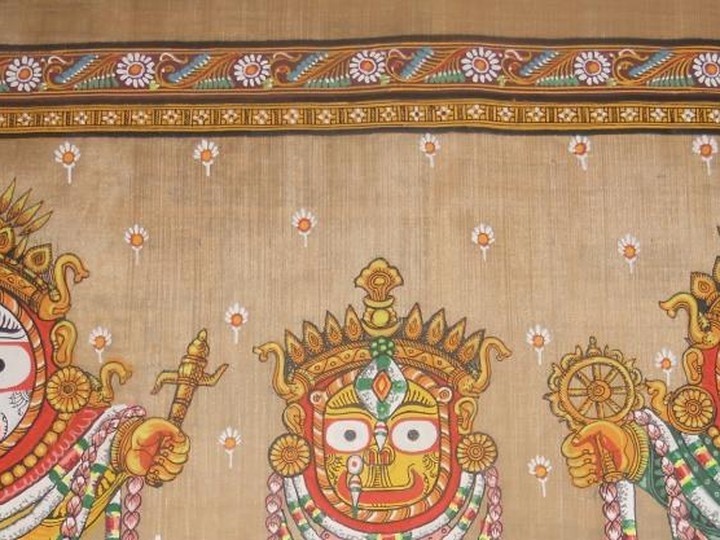
Pattachitra scroll painting on tussar silk
Mythological scroll art hand-painted by Raghurajpur's GI-certified Pattachitra artisans
| Origin | Raghurajpur, Odisha, India |
| Indian subcontinent | Yes |
| Category | Art & Heritage Objects |
| Retail price band | mid |
| Bulk / trade price band | budget (small tussar-silk formats, wholesale) |
| Sourcing status | Dossier researched from public sources — producer contact not yet established |
| Compliance status | Preliminary review complete (see below) — not yet legally verified |
Detailed study
Pattachitra ('patta' = cloth, 'chitra' = picture) is a cloth- or palm-leaf-based scroll painting technique using natural mineral and vegetable pigments applied with fine brushes onto a canvas prepared by layering cloth with a tamarind-seed and chalk-powder paste; the classic form uses cotton cloth ('patta'), while tussar (tussar/tasar wild silk) versions are a popular contemporary adaptation for a lighter, more luxurious support. Themes are drawn primarily from Jagannath temple iconography and Hindu epics (Ramayana, Mahabharata, Krishna Leela).
Provenance & producer
The art form is centered on Raghurajpur, a heritage craft village near Puri, Odisha, and the broader Puri district, historically linked to the Jagannath Temple's ritual art economy; the National Award-winning artisan community there has practiced it for centuries in a hereditary chitrakar (painter caste) system. 'Odisha Pattachitra' holds a registered GI tag protecting authentic Odisha-origin work from other regional patachitra traditions (e.g., West Bengal's distinct Patachitra scroll style).
Market & pricing
Genuine hand-painted Pattachitra on tussar silk occupies a mid-to-premium craft/collector niche above mass tourist Pattachitra prints, valued for labor-intensive natural pigment work and fine detailing; Raghurajpur's UNESCO-recognized 'heritage craft village' status and government tourism promotion have grown export and collector demand from India's craft-retail sector and international ethnic/religious-art buyers.
Compliance & export
Buyers should confirm GI-compliant sourcing from Odisha (Raghurajpur/Puri) artisans, since a visually similar but distinct Bengal 'Patachitra' tradition exists and mislabeling risks GI misrepresentation; standard handicraft export documentation applies, and because natural mineral/stone pigments and tamarind-paste-prepared cloth are used, no restricted materials are typically involved, though provenance/artist-certificate documentation is recommended for higher-value collector pieces to support authenticity claims.
Sources
- Pattachitra - Wikipedia
- Raghurajpur - Wikipedia
- Pattachitra artists in Odisha's Raghurajpur strive to keep art alive - The Federal
Image status
A working reference photograph is in place, captured from a freely-licensed Wikimedia Commons source (File:Raghurajpur Pattachitra,ODISHA.JPG). Depicts authentic Raghurajpur-origin Pattachitra work, matching the claimed origin — verify licence on Commons page. Treat this as a placeholder for marketing purposes: exact licence terms should be re-verified on the Commons file page, and original producer photography is recommended before final trade use.