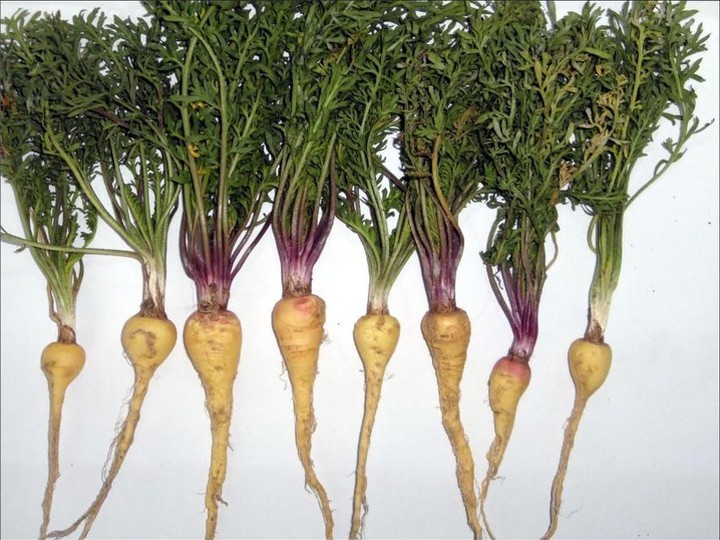
Peruvian maca root, red-variety powder
Cultivated above 4,000m on the wind-scoured Junín plateau — one of the only places on Earth cold and high enough to grow it — red-variety maca root is sun-dried and milled into a dense, malty-sweet adaptogen powder.
| Origin | Junín, Peru |
| Indian subcontinent | No |
| Category | Rare Spices, Botanicals & Teas |
| Retail price band | Retail roughly EUR/USD 15-25 per 1kg bag of organic red maca powder (Pampa Direct, Sunday, Amazon Andes listings) |
| Bulk / trade price band | Pricing under research |
| Sourcing status | Dossier researched from public sources — producer contact not yet established |
| Compliance status | Preliminary review complete (see below) — not yet legally verified |
Detailed study
Maca (Lepidium meyenii/peruvianum) is a Brassicaceae root crop uniquely adapted to grow at extreme altitude (roughly 3,800-4,500m) where almost no other food crop survives; it is traditionally sun- and freeze-dried over weeks on the open plateau before grinding. Three main colour phenotypes — yellow (most common), red and black — are distinguished, with published phytochemical/genetic research documenting differing glucosinolate and alkaloid profiles across the colour variants; red maca is commonly marketed for its distinct flavonoid content and traditional reputation for hormonal-support use.
Provenance & producer
Historic and current cultivation is centred on the Junín Plateau (Meseta del Bosque de Piedras / Junín region) and neighbouring Pasco region of the central Peruvian Andes, a specific high-altitude ecological niche referenced repeatedly across specialty suppliers as the authentic growing zone, distinct from lower-altitude regions where maca cannot properly mature. Smallholder Andean farmers grow, harvest and often sun-dry the roots locally before sale to processors for organic certification and export.
Market & pricing
Organic red maca powder retails around EUR/USD 15-25 per kg at specialty superfood suppliers, a premium versus generic mixed-colour maca, reflecting red maca's smaller harvest share and specific demand from the adaptogen/wellness supplement market in the US and EU.
Compliance & export
No DOP/PGI protection exists for Peruvian maca specifically, though there has been academic and policy discussion about protecting the Junín-Pasco origin given past cases of maca germplasm being exported and grown/patented elsewhere (notably a controversial US patent attempt on maca extracts in the 2000s that drew biopiracy criticism from Peru). For US/EU import, maca powder is regulated as a food/dietary-supplement ingredient — USDA/EU Organic certification is commonly required for the premium segment, and supplement-market sellers in the US must comply with DSHEA labelling rules while EU sellers must meet Novel Food/food-supplement regulations.
Sources
- Sunday – Organic Red Maca Powder, Raw from Peru (Junín/Pasco, 4,000m)
- PubMed – Peruvian Maca: Effects of Cultivation Altitude on Phytochemical and Genetic Differences
- Wikipedia – Lepidium meyenii
Image status
A working reference photograph is in place, captured from a freely-licensed Wikimedia Commons source (File:Maca (Lepidium meyenii).png). Lepidium meyenii (maca) roots freshly harvested, Vahe Martirosyan, CC BY 2.5, via Wikimedia Commons. Note: this specimen was grown in experimental cultivation outside Peru; it illustrates the species and root morphology, not the Peruvian high-altitude origin claimed for this listing. Treat this as a placeholder for marketing purposes: exact licence terms should be re-verified on the Commons file page, and original producer photography is recommended before final trade use.