Peruvian Sacha Inchi omega-rich seed oil
The Inca Peanut's omega-rich oil, cold-pressed from Amazon basin smallholder farms in Peru.
| Origin | Amazon basin, Peru |
| Indian subcontinent | No |
| Category | Ayurveda & Wellness Extracts |
| Retail price band | mid |
| Bulk / trade price band | wholesale, competitive against fish/flax oil in omega-3 blends |
| Sourcing status | Dossier researched from public sources — producer contact not yet established |
| Compliance status | Preliminary review complete (see below) — not yet legally verified |
Detailed study
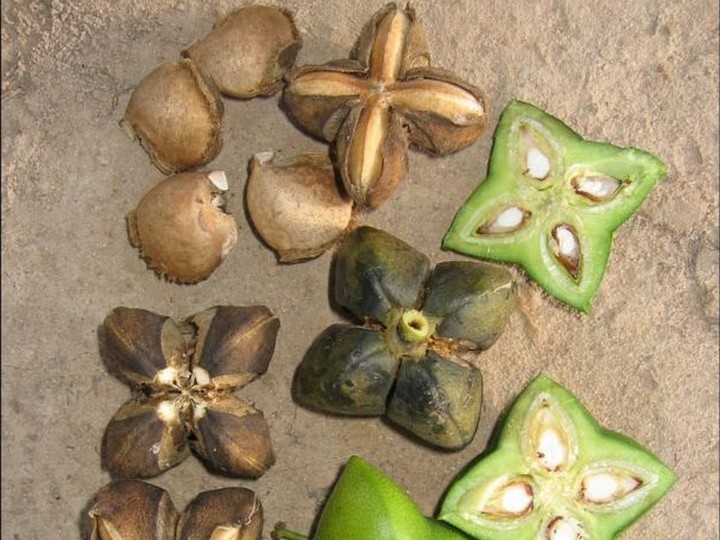
Sacha Inchi (Plukenetia volubilis), the 'Inca peanut,' produces star-shaped seed pods whose kernels are cold-pressed into an oil exceptionally rich in polyunsaturated fatty acids, notably alpha-linolenic acid (omega-3, often 45–50% of fatty acid content) alongside linoleic acid (omega-6) and natural tocopherols (vitamin E), giving it one of the highest plant-based omega-3 concentrations known. Cold-pressing preserves these unsaturated fats without heat degradation, distinguishing quality oil from solvent-extracted commodity versions.
Provenance & producer
Native to the Peruvian Amazon basin, Sacha Inchi has been cultivated by Indigenous Amazonian communities for centuries and is now grown as an organized smallholder cash crop across regions like San Martín, Loreto and Ucayali, often through cooperative and fair-trade-oriented supply chains rather than wild collection. Its cultivation is promoted as an environmentally beneficial alternative crop that supports Amazon smallholder livelihoods and reduces pressure toward deforestation-linked agriculture.
Market & pricing
Sacha Inchi oil has an established position in the global plant-based omega-3 nutraceutical and functional-food market, competing with flaxseed and algae oil as a vegan omega-3 source; the global Sacha Inchi oil/omega-3 market is projected for continued growth through the mid-2030s. Pricing sits mid-tier, appealing to vegan/vegetarian supplement buyers, natural cooking-oil retailers and cosmetic-oil formulators (it's also used topically in skincare).
Compliance & export
No CITES or IUCN-threatened status applies to Plukenetia volubilis. In Peru, export of Sacha Inchi oil is regulated by national food-safety (DIGESA) and agricultural-export authorities; in the US it is sold as a food/dietary-supplement product under FDA rules (GRAS-type food oil or DSHEA supplement depending on form), and in the EU it required Novel Food authorization historically, so current EU-market sellers should confirm the ingredient's approved Novel Food status before marketing claims.
Sources
- Wikipedia: Sacha inchi oil
- Sacha inchi: emerging source of nutrients and omega-3
- Sacha Inchi Oil Market Size & Forecast
Image status
A working reference photograph is in place, captured from a freely-licensed Wikimedia Commons source (File:Plukenetia volubilis (Sacha Inchi) Euphorbiaceae Peru.png). Explicitly depicts the Peru-origin plant/seed pods — verify licence on the Commons page before use. Treat this as a placeholder for marketing purposes: exact licence terms should be re-verified on the Commons file page, and original producer photography is recommended before final trade use.