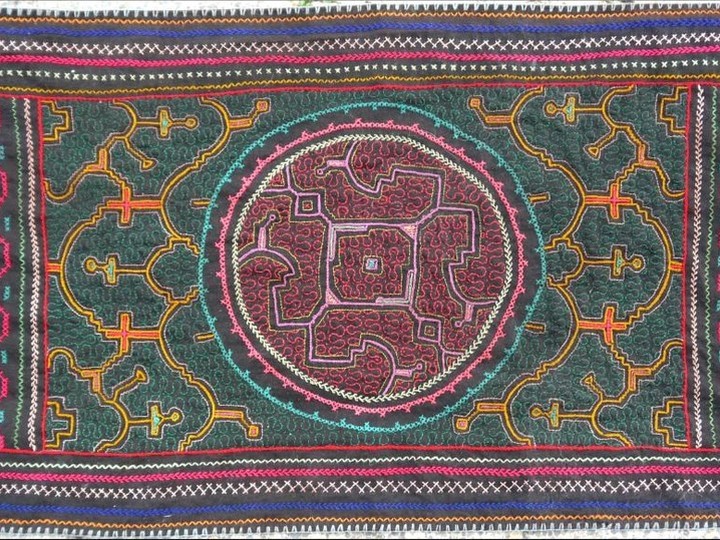
Peruvian Shipibo textile art panel
Hand-embroidered Amazonian kené geometry, stitched by Shipibo-Konibo master artisans.
| Origin | Ucayali, Peru |
| Indian subcontinent | No |
| Category | Art & Heritage Objects |
| Retail price band | $120–$450 per panel (size/complexity dependent) |
| Bulk / trade price band | $70–$220/unit for wholesale orders of 20+ panels, MOQ typically 10–20 pieces |
| Sourcing status | Dossier researched from public sources — producer contact not yet established |
| Compliance status | Preliminary review complete (see below) — not yet legally verified |
Detailed study
Kené are the intricate geometric line patterns embroidered or painted by Shipibo-Konibo women onto cotton cloth, ceramics and skin. Anthropologists and the artisans themselves describe the designs as visualizations of songs and cosmological/plant-medicine (ayahuasca) knowledge transmitted through generations of women. Traditional panels are made from handwoven or commercial cotton cloth densely embroidered in cross-stitch with plant-dyed or synthetic thread.
Provenance & producer
Genuine kené textiles originate from Shipibo-Konibo villages along the Ucayali River in Peru's Amazon basin, centered around Pucallpa, San Francisco and Yarinacocha. Production is done by hand by individual women or artisan cooperatives; there is no industrial manufacture of authentic kené. Peru's Ministry of Culture declared Shipibo-Konibo kené art Patrimonio Cultural de la Nación (National Cultural Heritage) in 2008 in recognition of its ethnographic and artistic significance.
Market & pricing
Demand comes from ethnographic art collectors, boutique home-décor retailers, fair-trade/ethical fashion brands and museums; Shipibo textiles are also sold directly through NGOs and cooperatives (e.g., in Cantagallo, Lima, and Pucallpa) supporting indigenous livelihoods. Prices vary hugely by size, thread density and the individual artisan's reputation; large master-worked panels can command museum-level prices.
Compliance & export
No CITES or wildlife-trade issues apply (cotton textile, non-endangered material). Buyers should verify fair-trade/ethical sourcing and direct-to-artisan payment given documented concerns about intermediaries underpaying Shipibo weavers; some importers seek attribution documentation naming the individual artisan/cooperative for authenticity and provenance.
Sources
- Wikipedia — Kené
- Bow Seat — Discovering Kené: The Patterns That Connect Life and Nature
- Brown University — Off the Roll: Kené Textile (Shipibo-Conibo)
Image status
A working reference photograph is in place, captured from a freely-licensed Wikimedia Commons source (File:Arte kene SHIPIBO-KONIBO.jpg). Shipibo tribe textile art from Iquitos, Peru, Luke Hancock, CC0 Public Domain, via Wikimedia Commons Treat this as a placeholder for marketing purposes: exact licence terms should be re-verified on the Commons file page, and original producer photography is recommended before final trade use.