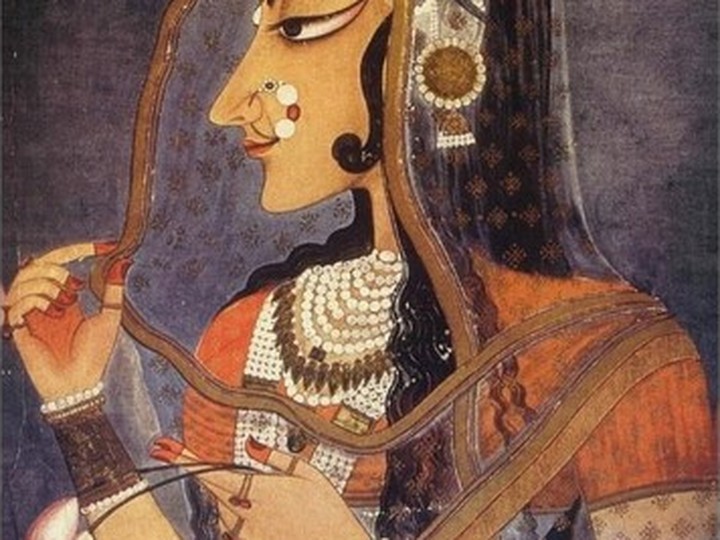
Rajasthani miniature painting, Kishangarh school
Fine-line miniature art in the lineage of Bani Thani, painted in Kishangarh's royal idiom
| Origin | Kishangarh, Rajasthan, India |
| Indian subcontinent | Yes |
| Category | Art & Heritage Objects |
| Retail price band | premium |
| Bulk / trade price band | mid (smaller-format wholesale pieces) |
| Sourcing status | Dossier researched from public sources — producer contact not yet established |
| Compliance status | Preliminary review complete (see below) — not yet legally verified |
Detailed study
Kishangarh miniature painting is a refined Rajasthani court style noted for elongated facial features, arched eyebrows, curved almond eyes, and pointed chins, executed in fine natural-pigment brushwork on paper or (for tourist/decor pieces) treated cloth or board, historically prized for lyrical, poetic depictions of Radha-Krishna devotion. Its most iconic image, 'Bani Thani' (c. 1750, attributed to court painter Nihal Chand), is considered a masterpiece of the genre.
Provenance & producer
The style is named for and originates in Kishangarh, a former princely state in present-day Ajmer district, Rajasthan, developed under the patronage of Raja Sawant Singh in the mid-18th century; it is one of several distinct Rajasthani miniature schools (alongside Mewar, Bundi, Kota, Jaipur), and is genuinely and specifically tied to Kishangarh as claimed.
Market & pricing
Kishangarh-style miniatures range from affordable tourist-market reproductions of the Bani Thani image up to premium fine-art pieces by trained miniature artists using traditional squirrel-hair brushes and stone/mineral pigments, appealing to collectors of Indian court art, South Asian art history enthusiasts, and premium home-decor buyers seeking a recognizable, iconic Indian image.
Compliance & export
No GI tag currently protects 'Kishangarh painting' specifically (unlike Madhubani or Pattachitra), so authenticity rests on artisan/artist attribution and technique documentation (hand-painted with natural pigments vs. digital/print reproduction) rather than a legal geographic designation; standard Indian handicraft export documentation applies, and antique/pre-1900s originals would fall under India's Antiquities and Art Treasures Act export-licensing rules if genuinely old.
Sources
- Bani Thani - Wikipedia
- Bani Thani Painting, Kishangarh School - Vajiram & Ravi
- The Chronicles of Kishangarh Miniature Paintings - Rooftop
Image status
A working reference photograph is in place, captured from a freely-licensed Wikimedia Commons source (File:4 Radha (Bani Thani), Kishangarh, ca. 1750, National Museum New Delhi.jpg). Public domain (18th-century artwork, out of copyright, museum-photographed) — historic National Museum original, a genre reference rather than new retail stock. Treat this as a placeholder for marketing purposes: exact licence terms should be re-verified on the Commons file page, and original producer photography is recommended before final trade use.