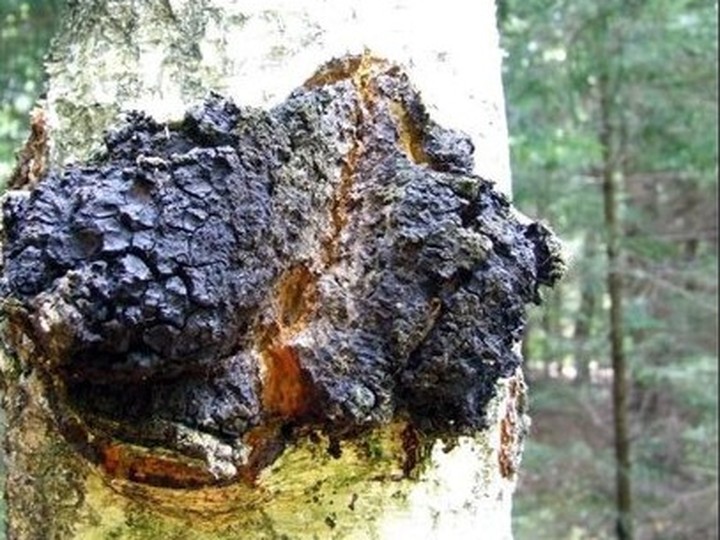
Siberian Chaga, cold-climate wild harvest
Wild chaga cut from birch stands in Russia's Altai region, a classically cited cold-climate chaga source in the international herbal trade.
| Origin | Altai region, Russia |
| Indian subcontinent | No |
| Category | Fungi & Functional Mycology |
| Retail price band | Amazon-listed Siberian chaga chunks retail at consumer pack pricing for 100g and 1kg formats; positioned as premium wild-origin chaga distinct from cultivated/commodity material. |
| Bulk / trade price band | Trade listings (TradeKey) cite Altai-region origin for bulk dried wild Siberian chaga aimed at export buyers, but no fixed current per-kg figure was captured. |
| Sourcing status | Dossier researched from public sources — producer contact not yet established |
| Compliance status | Preliminary review complete (see below) — not yet legally verified |
Detailed study
Siberia's birch taiga (Altai region) is one of the classical source regions cited in Russian traditional medicine and the modern international chaga trade, alongside the Baltic states and Fennoscandia. Cold, continental Siberian winters are frequently cited by suppliers as producing denser, higher-triterpene-content sclerotia, a trade claim rather than independently confirmed.
Provenance & producer
Multiple specialist suppliers (Siberian Secret, Sayan Chaga, Baikal Herbs/ChagaTrade, Dragon Herbs) explicitly market Altai/Siberian-region wild collection, indicating an established small-operator wild-harvest trade structure, though none describe a named cooperative or certification body.
Market & pricing
No single authoritative current per-kg wholesale figure for Altai-origin chaga was captured; multiple specialist Western import brands sell it as a distinct premium tier versus generic chaga.
Compliance & export
Fungi are outside CITES scope. Russian export of wild-collected non-timber forest products is subject to Russian customs/phytosanitary documentation; buyers should request phytosanitary certificates and confirm current sanctions-related trade restrictions affecting Russian-origin goods.
Sources
- Wild Siberian Chaga Mushroom, Altai Region (TradeKey)
- Wild Siberian Chaga Products (Siberian Secret)
- Wild Siberian Chaga (Dragon Herbs)
- Siberian Chaga Mushroom Whole Chunks, Wild Harvested (Amazon)
Image status
A working reference photograph is in place, captured from a freely-licensed Wikimedia Commons source (File:Inonotus obliquus.jpg). Hosted on Wikimedia Commons; exact tag not independently re-verified — confirm on file page before use. Treat this as a placeholder for marketing purposes: exact licence terms should be re-verified on the Commons file page, and original producer photography is recommended before final trade use.