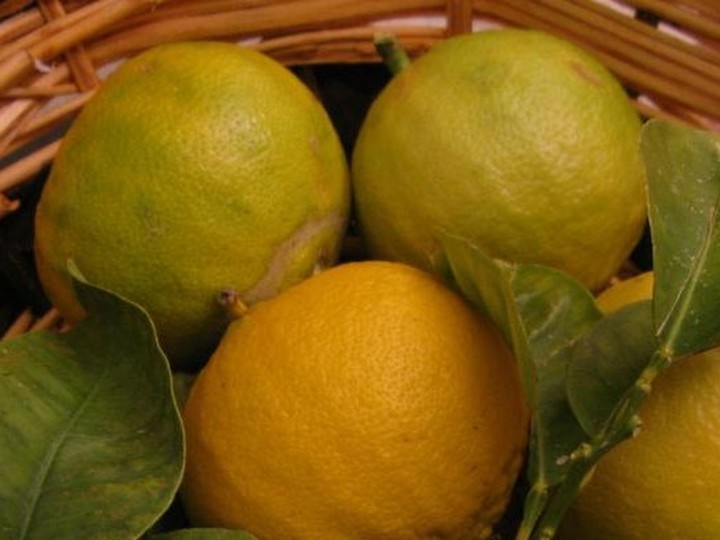
Sicilian bergamot essential oil, cold-pressed
Cold-pressed from the peel of Citrus bergamia grown almost exclusively on a narrow Ionian coastal strip of Reggio Calabria, this essential oil is the aromatic backbone of Earl Grey tea and classical eau de cologne.
| Origin | The product name 'Sicilian bergamot' conflicts with its own stated origin (Reggio Calabria) and with reality: bergamot (Citrus bergamia) is a Calabrian specialty, not Sicilian. Approximately 90% of world bergamot production comes from the Ionian coastal strip of Reggio Calabria province in Calabria, on the Italian mainland directly across the Strait of Messina from Sicily — a different region entirely. Corrected name/origin: 'Calabrian bergamot essential oil, cold-pressed — Reggio Calabria, Calabria, Italy'. |
| Indian subcontinent | No |
| Category | Rare Spices, Botanicals & Teas |
| Retail price band | Retail roughly USD 15-40 per 30-100ml bottle at aromatherapy/perfumery suppliers (New Directions Aromatics, Perfumer's Apprentice) |
| Bulk / trade price band | Wholesale/producer price approx. EUR 180-220 per kg for Calabrian bergamot essential oil (KiTalent industry report) |
| Sourcing status | Dossier researched from public sources — producer contact not yet established |
| Compliance status | Preliminary review complete (see below) — not yet legally verified |
Detailed study
Bergamot (Citrus bergamia) is a hybrid citrus grown almost nowhere else at commercial scale; its rind yields, by cold expression, an essential oil rich in linalyl acetate and linalool that gives Earl Grey tea its citrus-floral signature and forms the top note of countless colognes since the 18th-century original 'Eau de Cologne'. Bergaptene (a furocoumarin causing photosensitivity) is naturally present in the standard oil, and a separate 'bergaptene-free' (FCF) grade is produced for cosmetic use where phototoxicity must be minimised.
Provenance & producer
Roughly 90% of world bergamot is grown along a narrow Ionian coastal microclimate strip of Reggio Calabria province in Calabria, southern Italy — a geography so specific that the fruit essentially cannot be replicated elsewhere at comparable quality. Harvest and cold-pressing are still substantially artisanal/family-farm based, coordinated through regional consortia (e.g. Consorzio del Bergamotto di Reggio Calabria), which also holds the DOP designation for the fresh fruit itself.
Market & pricing
Bergamot essential oil trades at a significant premium versus common citrus oils, priced around EUR 180-220/kg at the Calabrian producer level, driven by concentrated geographic supply, strong fragrance-industry demand, and growing food/beverage use.
Compliance & export
The fresh fruit 'Bergamotto di Reggio Calabria' holds EU DOP status, though the essential oil itself is typically traded under quality/purity standards (ISO 3520) rather than a DOP oil designation specifically. For cosmetic use in the EU/US, standard bergapten oil is subject to IFRA usage restrictions and EU Cosmetics Regulation photosensitivity labelling requirements, which is why bergaptene-free (FCF) oil is widely offered as a compliant alternative for leave-on skin products.
Sources
- Givaudan – Responsibly sourcing bergamot from Calabria
- KiTalent – Reggio Calabria's Bergamot: A €220/kg Ingredient
- Wikipedia – Bergamot orange
Image status
A working reference photograph is in place, captured from a freely-licensed Wikimedia Commons source (File:Bergamotti (Bergamot fruits) - (4).jpg). Clearly labelled bergamot fruit image (Citrus bergamia); confirm licence on file page. Category:Citrus bergamia and File:Citrus bergamia - Bergamot.jpg are alternative verified options. Treat this as a placeholder for marketing purposes: exact licence terms should be re-verified on the Commons file page, and original producer photography is recommended before final trade use.