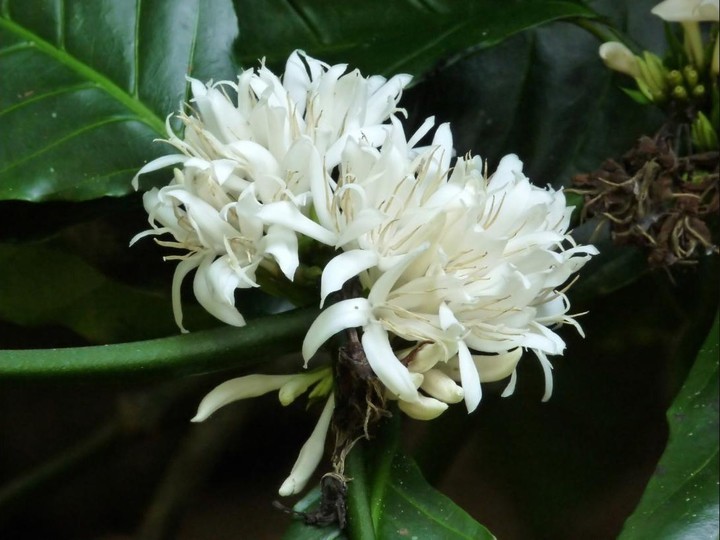
Single-estate Coorg robusta coffee, shade-grown
Shade-grown under native rainforest canopy on a single Kodagu (Coorg) estate, this GI-recognized robusta develops the bold body and low acidity that define Karnataka's historic coffee country.
| Origin | Coorg, Karnataka, India |
| Indian subcontinent | Yes |
| Category | Rare Spices, Botanicals & Teas |
| Retail price band | Retail roughly ₹350–₹700 for 250g of estate-branded robusta/filter coffee at specialty Coorg roasters (e.g. Ainmane, Coorg Coffee Roastery listings); farm-gate green robusta prices have recently traded near ₹250–300/kg amid tight 2025 supply |
| Bulk / trade price band | Farm-gate/green bean robusta prices reported near record levels around ₹250–300/kg in Kodagu/Wayanad/Nilgiris markets in early 2025, per regional coffee-price reporting |
| Sourcing status | Dossier researched from public sources — producer contact not yet established |
| Compliance status | Preliminary review complete (see below) — not yet legally verified |
Detailed study
Coorg (Kodagu) robusta is grown as Coffea canephora under a multi-tiered shade canopy of native and introduced trees (silver oak, jackfruit, rosewood), a traditional Western Ghats plantation system that moderates temperature, suppresses weeds and supports biodiversity alongside cultivation of pepper vines and cardamom as intercrops on the same estates. Robusta from this region is typically valued for higher yield, disease resistance and a fuller body versus arabica, commonly used in espresso blends and South Indian filter coffee. Grading follows standard green-bean parameters (screen size, defect count, moisture) set by coffee traders and the Coffee Board of India.
Provenance & producer
Kodagu district in Karnataka is India's largest coffee-producing region, historically developed under British-era plantations and now dominated by family-owned estates (many multi-generational) practicing shade-grown cultivation under the Western Ghats canopy. 'Coorg Arabica Coffee' and related south Indian coffee varieties received GI tags from the Coffee Board of India in 2019 (alongside Chikmagalur, Araku Valley, Wayanad and Baba Budan Giri coffees), formally recognizing region-specific quality traits, though the widely cited GI registration is specifically for Coorg arabica rather than robusta.
Market & pricing
South Indian coffee prices have been elevated through 2024–2025 due to lower production; regional reporting (Onmanorama, Feb 2025) put Kerala/Karnataka coffee prices near ₹300/kg at the farm gate, and branded single-estate Coorg robusta retail packs (250g) commonly sell in the ₹350–700 range through direct-to-consumer estate websites.
Compliance & export
Coffee exports from India fall under Coffee Board of India registration requirements (exporters must register with the Board) plus standard FSSAI food-safety compliance for domestic sale and APEDA-adjacent documentation for export; robusta is not subject to any special wildlife or forest-produce restriction. Buyers should verify whether a specific estate's product actually carries the Coorg Arabica GI mark, since that GI registration applies to arabica coffee from the region rather than robusta specifically — 'Coorg robusta' as a term is a regional/varietal descriptor, not itself a separately registered GI.
Sources
- Onmanorama — Wayanad, Coorg, Nilgiris coffee hubs cheer as prices near ₹300/kg (Feb 2025)
- PIB — GI Certification for five varieties of Indian coffee
- Ainmane — Robusta of Coorg product page
Image status
A working reference photograph is in place, captured from a freely-licensed Wikimedia Commons source (File:Coffea canephora 1 at Aanakkulam.jpg). Correctly depicts Coffea canephora (robusta) but photographed at Aanakkulam, not confirmed to be in Kodagu/Coorg specifically — usable as a botanically accurate robusta reference with a caption noting it is not a confirmed Coorg-estate photo. No Commons image was found that is confirmed to be a labeled Kodagu coffee estate; standard Commons licensing applies, verify exact terms on file page. Treat this as a placeholder for marketing purposes: exact licence terms should be re-verified on the Commons file page, and original producer photography is recommended before final trade use.