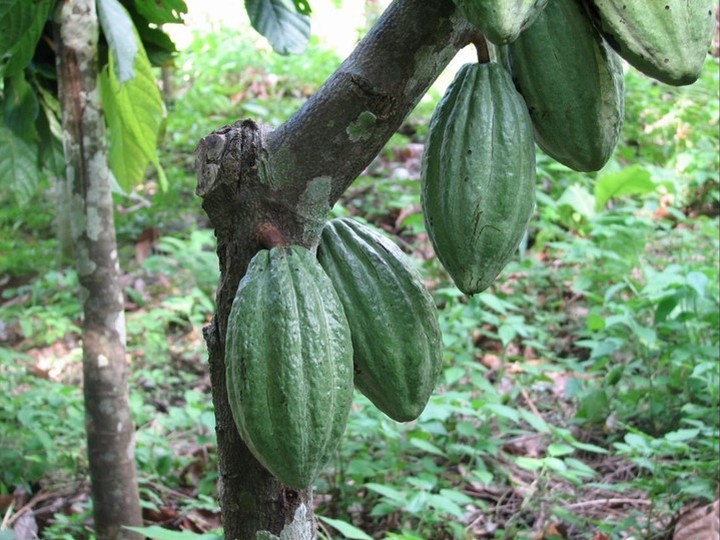
Single-origin fine-flavour cacao, criollo variety
Grown by smallholders in the dry Marañón-influenced valleys of Piura, Peru, the rare 'Blanco de Piura' criollo cacao yields pale, fruity beans considered among the world's finest and most aromatic single-origin chocolate stock.
| Origin | Piura, Peru |
| Indian subcontinent | No |
| Category | Rare Spices, Botanicals & Teas |
| Retail price band | Craft-chocolate retail bars (e.g. 70% Piura Blanco) typically USD 8-14 per 50-70g bar (Bar & Cocoa and similar craft chocolate makers) |
| Bulk / trade price band | Pricing under research |
| Sourcing status | Dossier researched from public sources — producer contact not yet established |
| Compliance status | Preliminary review complete (see below) — not yet legally verified |
Detailed study
'Blanco de Piura' (also called Piura Blanco/Porcelana-type) is a rare native criollo cacao variety distinguished by its pale, near-white cotyledon and low anthocyanin content, prized in the fine-flavour/craft chocolate world for delicate fruity, floral notes rather than the bitter, astringent profile of bulk forastero cacao. Fine-flavour designation from bodies like the ICCO/Cocoa of Excellence recognizes such native varieties for their aromatic complexity and low tannin bitterness, commanding significant premiums over commodity cacao.
Provenance & producer
This cacao is grown in the Piura region of northern Peru, notably in valleys near the Marañón/Huancabamba river system where a genetically distinct, ancient population of wild and semi-domesticated criollo cacao survives — an area increasingly documented by cacao researchers as a genetic reservoir predating widespread hybridization. Smallholder farmers and small cooperatives ferment and dry beans locally before selling to specialty exporters and craft chocolate makers.
Market & pricing
Fine-flavour, single-origin cacao trades at a substantial premium to commodity cocoa (which itself has seen extreme price volatility, spiking above USD 10,000/tonne in 2024); craft chocolate makers price finished Piura-origin bars at USD 8-14 for small bars, reflecting both cacao scarcity and the artisanal, small-batch production model.
Compliance & export
No DOP/PGI protection applies to Peruvian cacao varietal names; 'criollo' and regional names like 'Piura Blanco' are informal trade/varietal descriptors rather than legally protected geographic indications. Standard US/EU food-import rules apply; increasingly relevant is the EU Deforestation Regulation (EUDR), which requires proof of deforestation-free sourcing and geolocation traceability for cocoa imported into the EU — a real compliance consideration for any Peru-sourced cacao entering EU markets.
Sources
- Bar & Cocoa – Piura Cacao Region, Peru
- Meridian Cacao Co – Peru Piura White
- Chocolate Alchemy – Peru Piura Blanco Organic
Image status
A working reference photograph is in place, captured from a freely-licensed Wikimedia Commons source. Theobroma cacao fruit pods on tree, Semiliki National Park, sarahemcc, CC BY 2.0, via Wikimedia Commons. Note: illustrative of cacao pod morphology generally; not photographed at the specific criollo-variety origin claimed for this listing. Treat this as a placeholder for marketing purposes: exact licence terms should be re-verified on the Commons file page, and original producer photography is recommended before final trade use.