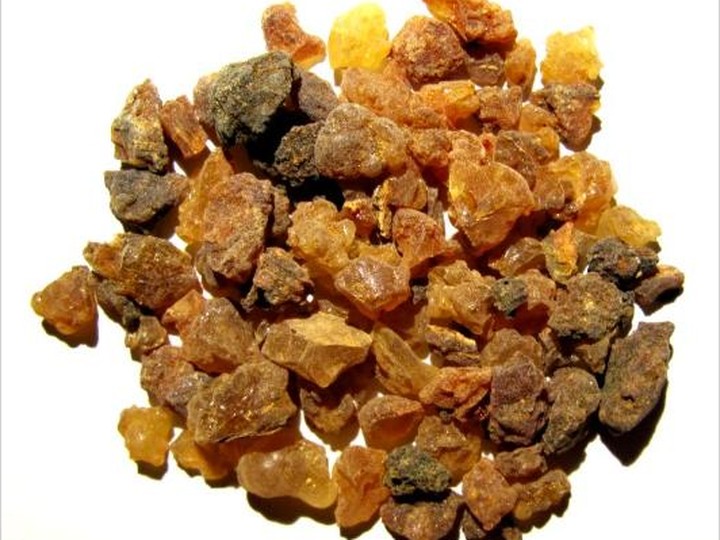
Somali myrrh resin, wild-tapped
Wild-tapped myrrh resin from the Horn of Africa's ancient aromatic trade routes.
| Origin | Puntland, Somalia |
| Indian subcontinent | No |
| Category | Global Fibers, Oils & Botanicals |
| Retail price band | $$ (indicative $15–$35/kg for hand-sorted export-grade tears) |
| Bulk / trade price band | $8–$18/kg on bulk export orders, grade and moisture-content dependent |
| Sourcing status | Dossier researched from public sources — producer contact not yet established |
| Compliance status | Preliminary review complete (see below) — not yet legally verified |
Detailed study
Myrrh is the aromatic oleo-gum-resin tapped from Commiphora myrrha and related Commiphora species, valued for a bitter, warm-balsamic aroma used in incense, perfumery, traditional medicine and (in classical antiquity) embalming. Somalia and the wider Horn of Africa (alongside Yemen) is one of the historic core production regions, alongside frankincense.
Provenance & producer
Puntland's arid Commiphora scrubland supports wild-tapping by pastoralist and rural harvester communities, who incise the bark and collect the hardened resin tears over subsequent weeks; myrrh has been traded from this region via ancient Red Sea and Indian Ocean routes since at least pharaonic Egypt (the fabled 'Land of Punt' trade).
Market & pricing
Somali myrrh supplies global incense, fragrance, traditional/herbal medicine and aromatherapy markets, with significant historical trade volume through Middle Eastern and South Asian intermediary markets before reaching Western buyers; Somalia's political instability has periodically disrupted formal export chains, making supplier vetting and traceability a genuine practical concern for buyers.
Compliance & export
Commiphora myrrha is not CITES-listed, but overharvesting and unsustainable tapping practices across Horn of Africa Commiphora populations are a documented ecological concern in the resin trade literature; because Somalia's institutional export certification capacity is limited, buyers should conduct heightened supplier due diligence (conflict-resource and sanctions screening) alongside standard phytosanitary/customs documentation.
Sources
Image status
A working reference photograph is in place, captured from a freely-licensed Wikimedia Commons source. Myrrh (Commiphora myrrha) resin lumps, GeoTrinity, CC BY 3.0, via Wikimedia Commons. Note: photo captioned Origin: Oman rather than Somalia; myrrh resin morphology is consistent across the shared Horn-of-Africa/Arabian range of Commiphora myrrha, but this specific lot is not documented as Somali. Treat this as a placeholder for marketing purposes: exact licence terms should be re-verified on the Commons file page, and original producer photography is recommended before final trade use.